
Why No Drill Curtain Rods Are a Game-Changer for Renters
No drill curtain rods let you hang curtains without making a single hole in your walls — no screws, no anchors, no tools required (beyond a hammer for some methods).
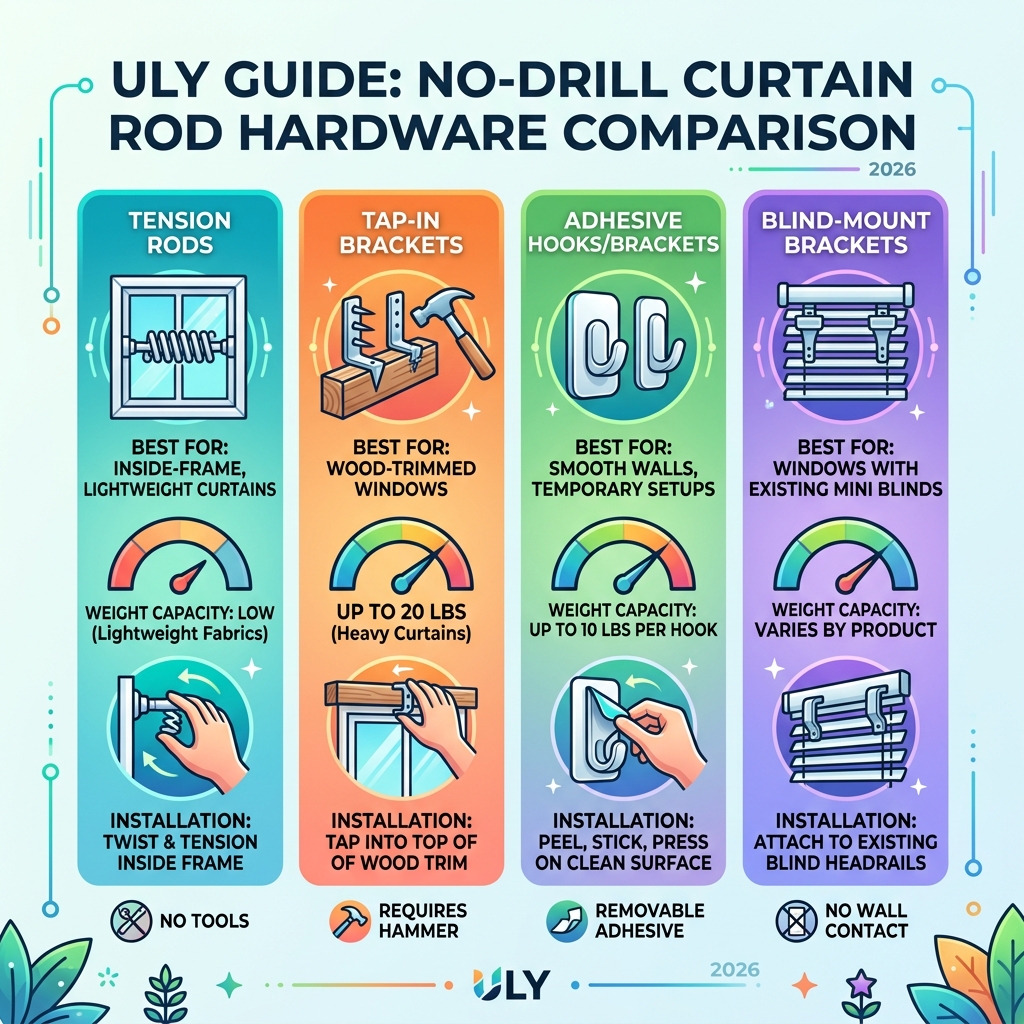
Here’s a quick look at your best options:
| Method | Best For | Weight Capacity |
|---|---|---|
| Tension rods | Inside-frame, lightweight curtains | Low (lightweight fabrics only) |
| Tap-in brackets | Heavy curtains on wood-trimmed windows | Up to 20 lbs |
| Adhesive hooks/brackets | Smooth walls, temporary setups | Up to 10 lbs per hook |
| Blind-mount brackets | Windows with existing mini blinds | Varies by product |
If you rent your home, you already know the stress of wanting to make your space feel like yours — without risking your security deposit. Curtains make a huge difference in how a room feels. But the moment you pick up a drill, you’re looking at patched walls, landlord conversations, and money out of your pocket.
The good news? No-drill curtain hardware has improved significantly over the past decade. Today’s options are stronger, easier to install, and better-looking than ever. Some install in under 10 seconds. Others can hold up to 20 pounds of drapery without touching your drywall.
This guide compares every major no-drill method so you can find the right fit for your windows, your curtains, and your space.
Understanding No Drill Curtain Rods and How They Work
At their core, no drill curtain rods are designed to solve a singular problem: hanging window treatments without piercing the drywall. Traditional curtain rods require a drill, plastic anchors, and screws that leave gaping holes behind. In contrast, no-drill solutions utilize physics, clever engineering, or high-tech adhesives to stay in place.
Most of these systems rely on one of three mechanisms:
- Outward Tension: Pressing against the inside of the window casing.
- Gravity and Leverage: Resting on top of existing window trim or blind headrails.
- Surface Adhesion: Using specialized strips that bond to the wall surface.
For those of us living in apartments or older homes with brittle plaster, these tools are a lifesaver. They offer total drywall protection while remaining completely tool-free or requiring only a simple household hammer. Whether you are looking for an inside mount (where the rod sits inside the window frame) or an outside mount (where the rod sits on the wall or trim), there is a damage-free solution available.
If you are just starting your home improvement journey, you might want to Explore No-Drill Solutions for Your Home | Gostosuras Doces to see how these hardware choices fit into a larger design plan. Learning The Best Ways to Hang Decor Without a Single Drill Hole can also help you coordinate your window treatments with the rest of your wall art and mirrors.
Top 4 Methods for Hanging Curtains Without a Drill
Choosing the right hardware depends on your window type and how heavy your curtains are. We’ve broken down the four most reliable methods used by renters and DIY enthusiasts today.
| Feature | Tension Rods | Tap-In Brackets | Adhesive Hooks | Blind-Mounts |
|---|---|---|---|---|
| Surface | Inside Frame | Wooden Trim | Smooth Wall | Blind Headrail |
| Install Time | 2 Minutes | 10 Seconds | 1 Hour (Set time) | 1 Minute |
| Max Weight | Low (5-10 lbs) | High (20 lbs) | Medium (10-20 lbs) | Medium (10 lbs) |
| Best Aesthetic | Minimalist | Traditional/Pro | Modern | Layered |
You can Discover Damage-Free Curtain Solutions | Gostosuras Doces to find the specific hardware that matches your room’s metal finishes and adjustable width requirements.
Tension Rods: The Classic No Drill Curtain Rods Solution
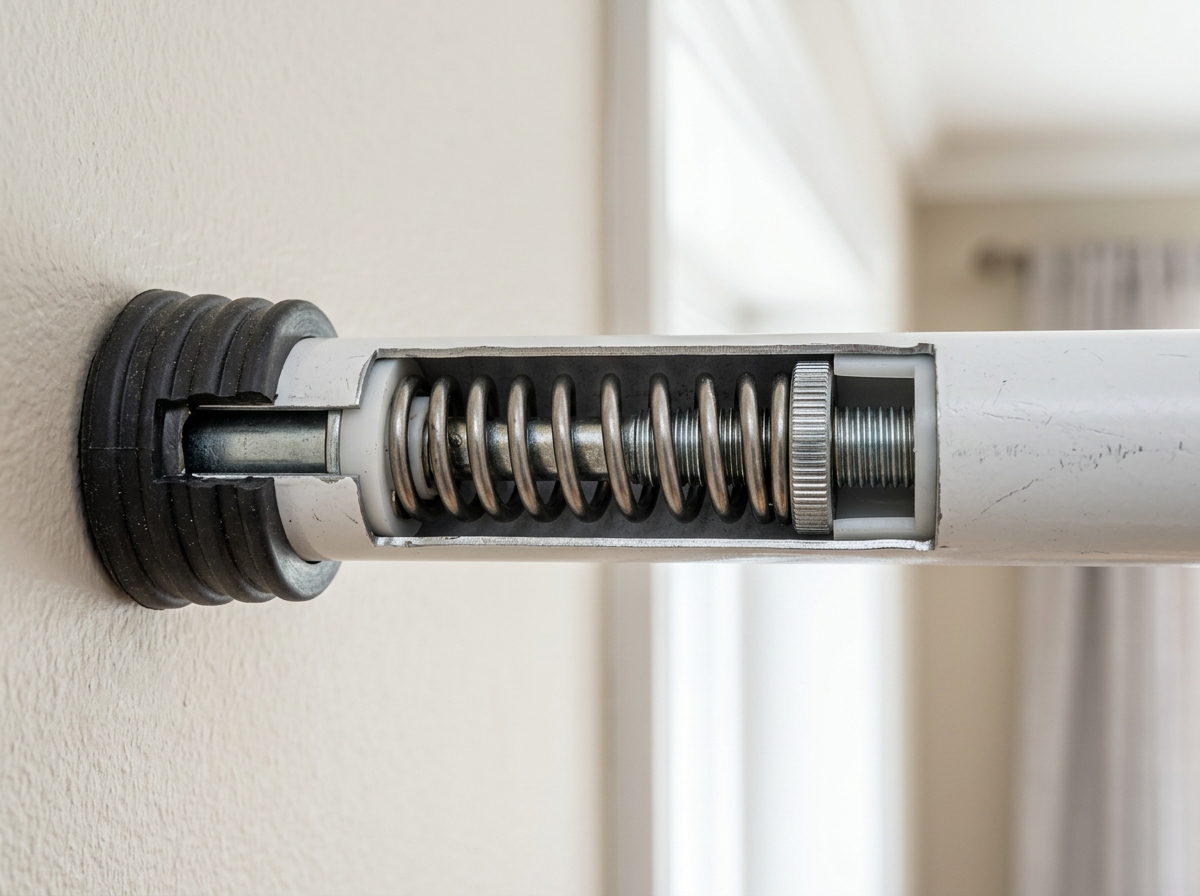
Tension rods are the “old faithful” of the no-drill world. They feature a spring-loaded) mechanism inside a metal or plastic tube. You simply twist the rod to extend it until it is slightly wider than your window opening, then compress the spring to fit it inside the frame.
- Pros: Extremely affordable, widely available at stores like Home Depot or Amazon, and requires zero tools.
- Cons: They only work for inside mounts. If you have a shallow window frame, they might not fit. They also have a tendency to “slip” or bow if the curtains are too heavy.
- Best Use: Use these for café curtains in a kitchen or lightweight sheer panels in a guest room.
If you like the idea of tension-based hardware, you should also Stop the Drilling with These Damage-Free Hooks for other areas of your home.
Tap-In Brackets: High-Strength No Drill Curtain Rods
If you want the look of a professional, high-end curtain rod without the drill, tap-in brackets (like Kwik-Hang) are the gold standard. These brackets feature small, thin pins—similar to thumbtacks—attached to a metal frame that wraps around the top corner of your wooden window trim.
You simply place the bracket on the corner of the trim and tap it in with a hammer. Because the weight is distributed across the top of the wood casing rather than pulling against the drywall, these can hold a staggering 20 lbs.
- Pros: Supports heavy blackout curtains, installs in seconds, and leaves only tiny pinholes that are invisible on top of the trim.
- Cons: Requires wooden window trim at least 1/2 inch wide. It won’t work on bare drywall or metal frames.
- Expert Tip: We recommend these for living rooms where you want 1-inch steel rods and heavy velvet drapes. You can Find Your Perfect No-Drill Brackets | Gostosuras Doces to match your existing decor.
Adhesive Hooks and Brackets
Command Heavyweight Hooks and similar adhesive brackets have revolutionized renter decor. These use a “stretch-release” adhesive that bonds to painted surfaces but pulls away cleanly without ripping the paint—provided you follow the instructions!
- Installation Tip: You must clean the wall with rubbing alcohol first. After applying the hook, wait at least one hour before hanging the rod to let the adhesive fully bond.
- Weight Capacity: High-end adhesive hooks can hold up to 10 pounds each, meaning a pair can support a 20-pound setup.
To ensure your walls stay pristine, check out How to Use Adhesive Wall Hangers Without Ruining Your Paint and How to Use Adhesive Brackets for Nail-Free Shelving.
Blind-Mount Brackets
Many apartments come with standard 1-inch mini blinds or vertical blinds already installed. Blind-mount brackets (like the NoNo Bracket) are designed to slide directly onto the existing headrail of your blinds. This allows you to “layer” curtains over your blinds without adding a single new fixture to the wall.
- Pros: Perfect for hiding “ugly” plastic blinds and adding privacy.
- Cons: Only works if your existing blinds are securely mounted.
- **Explore Blind-Mount Curtain Solutions | Gostosuras Doces to see if your window configuration is a match.
Strength, Weight Capacity, and Aesthetics
One of the biggest myths about no drill curtain rods is that they are “flimsy.” While that might have been true 20 years ago, modern engineering has changed the game.
Weight Capacity Matters If you are hanging heavy blackout curtains to keep the heat out (or the sleep in), you need to look at the weight limit. Tap-in style brackets are the heavy lifters of the group, comfortably supporting up to 20 lbs. For context, most standard curtain panels weigh between 2 and 5 pounds. This means you can easily hang a double rod setup with sheers and heavy drapes using the right no-drill brackets.
Preventing the “Sag” Aesthetics are just as important as strength. Nothing ruins a room’s vibe like a sagging curtain rod. For windows wider than 60 inches, we always recommend using a center support bracket. Even with no drill curtain rods, a center support prevents the rod from bowing in the middle under the weight of the fabric.
Choose 1-inch diameter rods for a more substantial, high-end look. They are less likely to bend than the thinner 5/8-inch variety. If you’re tackling more than just windows, you might find our guide on No Drill, No Problem: Heavy-Duty Shelving That Actually Stays Up helpful for maintaining a consistent, hole-free look throughout your home.
Installation Guide: How to Hang Your Curtains in Seconds
Ready to transform your room? Here is how to install the two most popular no-drill methods like a pro.
How to Install Tap-In Brackets (The 10-Second Method)
- Position: Place the bracket on the top corner of your wooden window frame. The “arm” should wrap around the front, while the pins rest on the top edge.
- Tap: Use a hammer or mallet to tap the pins into the wood. It usually takes 3 to 5 light taps.
- Repeat: Do the same on the other side.
- Hang: Place your rod (with curtains already threaded) onto the brackets.
How to Install Adhesive Brackets (The Precision Method)
- Clean: Wipe the wall area with rubbing alcohol. Do not use household cleaners, as they leave a slippery residue.
- Level: Use a level to mark exactly where the brackets will go. Unlike tap-in brackets, these don’t have a frame to guide them, so precision is key.
- Press: Apply the adhesive strip to the bracket, then press the bracket firmly against the wall for 30 seconds.
- Wait: This is the hard part! Wait at least one hour (or as directed) before hanging your curtains.
For more tips on keeping your rental in top shape, see Practical Wall Storage Ideas That Dont Require Drilling and our Easy Installation for No-Drill Brackets | Gostosuras Doces.
Frequently Asked Questions about No-Drill Hardware
Can no-drill curtain rods hold heavy blackout curtains?
Yes, but you must choose the right method. Tap-in brackets and heavy-duty adhesive hooks are rated for up to 20 lbs (when used as a pair). For heavy drapes, we recommend a 1-inch steel rod rather than a thin tension rod. Always use a center support for windows wider than 5 feet to ensure the weight is distributed evenly.
Do adhesive curtain brackets leave marks or ruin paint?
If removed correctly, adhesive brackets are completely damage-free. Most feature a pull-tab that stretches the adhesive until it releases its grip. However, if you “rip” it off the wall, you will likely take a chunk of drywall or paint with it. If a hook feels stuck, a putty knife and a little heat from a hairdryer can help loosen the bond safely.
For more advice on maintaining a damage-free home, read How to Organize Your Kitchen and Bath Without Picking Up a Drill.
Are these solutions compatible with existing window blinds?
Absolutely. If you have inside-mounted mini blinds, you have two great options. You can use a tension rod placed in front of the blinds (if there is enough depth in the window casing), or you can use blind-mount brackets that clip onto the metal headrail of the blinds. This is a favorite trick for renters who want to hide basic apartment blinds behind beautiful linen curtains.
Conclusion
At Gostosuras Doces, we believe that living in a rental shouldn’t mean living in a space that doesn’t feel like home. Reversible upgrades like no drill curtain rods allow you to express your style, improve your privacy, and even lower your energy bills without the stress of permanent alterations.
From the 10-second installation of tap-in brackets to the versatility of tension rods, there is a solution for every window in your apartment. By choosing the right hardware for your curtain weight and frame type, you can enjoy a high-end, professionally decorated look while keeping your security deposit safe.
Ready to organize the rest of your home? Click here for more small space organization ideas and start your journey toward a stress-free, beautiful living space today!
