
The Damage-Free Way to Hang Anything on Your Walls
Adhesive wall hangers are a simple, drill-free solution for hanging pictures, mirrors, hooks, and décor without damaging your walls or leaving behind large holes.
Here’s what you need to know at a glance:
| Type | Best For | Max Weight |
|---|---|---|
| Command-style adhesive strips | Pictures, lightweight frames | Up to 20 lbs |
| Heavy-duty adhesive hooks | Coats, bags, kitchen items | Up to 33 lbs |
| Mechanical drywall claws (e.g., 3M CLAW) | Heavy mirrors, oversized frames | Up to 65 lbs |
| Self-adhesive plates (e.g., STAS) | Panel art, aluminum dibond, acrylic | Up to 22 lbs |
Whether you’re a renter who can’t touch the walls or a homeowner who just hates patching drywall, these products are designed for you.
But here’s the catch: used incorrectly, they fall — and sometimes take your paint with them.
Getting it right is less about the product and more about the process. The surface needs to be clean. The weight needs to match the hanger. And you need to wait before loading it up.
This guide walks you through everything — types, surfaces, installation, removal, and the mistakes most people make.

Understanding Different Types of Adhesive Wall Hangers
When we talk about adhesive wall hangers, we aren’t just talking about those little white plastic hooks you see in the grocery store aisle. The world of damage-free hanging has expanded significantly, offering specialized solutions for everything from a set of car keys to a 65-pound floor-length mirror.
The primary difference between these and traditional nails is the “bond.” While a nail relies on the physical friction of metal against wood or drywall, an adhesive hanger relies on chemical bonding or specialized mechanical “claws” that distribute weight across a larger surface area.
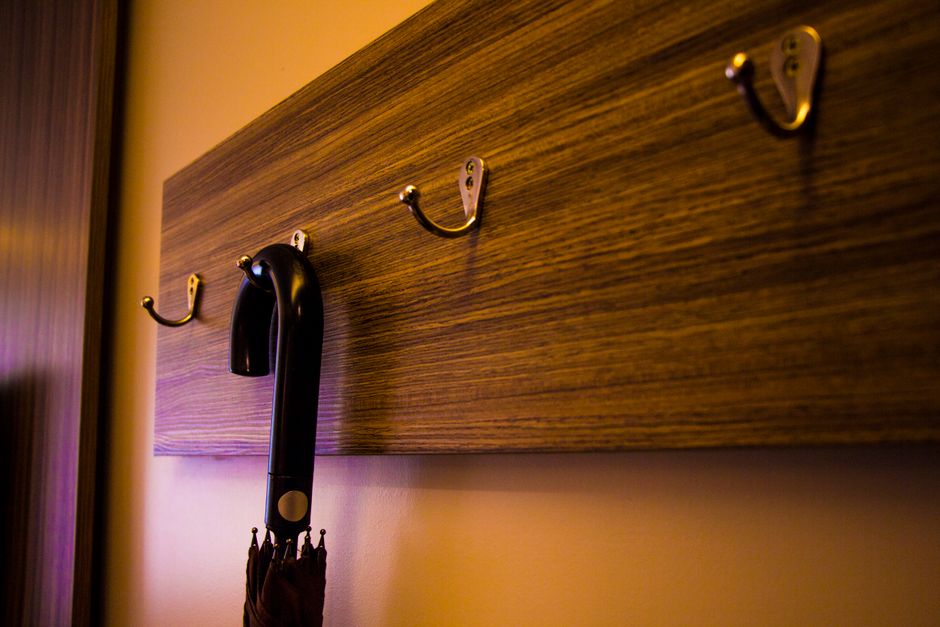
Here are the main categories you’ll encounter:
- Utility Hooks: These are the workhorses of the home. Available in plastic, wire, or even decorative metal finishes like brushed nickel or satin brass, they are perfect for practical wall storage ideas that don’t require drilling.
- Picture Hanging Strips: These use a hook-and-loop (Velcro-style) system. One strip goes on the wall, one on the frame, and they “click” together. This allows for easy leveling and repositioning.
- Heavy-Duty Adhesive Hooks: Some modern brands, such as Zcool Home, offer stainless steel hooks with high-strength adhesive backings capable of holding up to 33 lbs.
- Self-Adhesive Plates: Made of galvanized steel, these are designed to be fastened to the back of flat panels like acrylic or metal prints.
Mechanical Drywall Claws vs. Adhesive Strips
It is important to distinguish between “pure” adhesives and “mechanical” hangers like the 3M CLAW™. While the CLAW is often grouped with adhesive wall hangers because it requires no tools or studs, it actually uses hardened steel claws that lock into the drywall.
The advantage of the mechanical claw is sheer strength. While the strongest adhesive strips usually max out around 15 to 20 lbs, 3M CLAW™ hangers are proven to hold 15, 25, 45, and even 65 pounds. They are the go-to for heavy mirrors where you don’t want to hunt for a stud. However, unlike adhesive strips, they do leave tiny pin-sized holes—though these are significantly smaller than a traditional nail or screw anchor.
Specialized Hangers for Panels and Mirrors
For modern art styles like Aluminum Dibond, plexiglass, or PVC foam board, traditional hooks often won’t work because there is no wire or “lip” on the back of the art. In these cases, we use self-adhesive plates.
STAS and AS Hanging systems offer plates that use high-performance 3M adhesive (like Type No: 5952). These plates range in size from 2 inches (supporting about 2.2 lbs) to 4-inch versions that can support nearly 9 lbs. For very large acrylic prints, multiple plates can be used in tandem to create a “floating” effect, making the suspension completely invisible from the front.
Surface Compatibility: Where to Stick and What to Avoid
One of the most common reasons adhesive wall hangers fail is that they were applied to a surface they were never meant to touch. Adhesives work by creating a “molecular bond” with the surface. If that surface is flaky, porous, or dirty, the bond will only be as strong as the dirt it’s stuck to.
Best Surfaces for Adhesives:
- Painted Drywall: The most common surface. Ensure the paint is fully cured (usually 28 days after painting).
- Smooth Tile: Excellent for bathrooms and kitchens.
- Glass and Mirrors: High-strength bonds are easily achieved here.
- Finished Wood: Painted or varnished wood works well, provided it isn’t “distressed” or rough.
- Stainless Steel: Perfect for hanging organizers on the side of a fridge.
If you are a renter, understanding these surfaces is key to affordable storage solutions for renters, as it allows you to utilize vertical space without losing your security deposit.
Unsuitable Surfaces for Adhesives
Avoid these surfaces at all costs, or be prepared for your decor to take a tumble:
- Brick and Cinder Block: Too porous; the adhesive can’t get a grip.
- Wallpaper: The adhesive is often stronger than the wallpaper’s glue. When you remove the hook, the wallpaper comes with it.
- Fabric or Tapestries: Adhesives cannot bond to fibers.
- Unpainted Wood/MDF: These surfaces absorb the “tack” of the adhesive, leading to failure.
- Peeling Paint: If the paint is already failing, the weight of the hook will simply pull the paint off the wall.
Step-by-Step Guide to Proper Installation
Most people “peel and stick” in five seconds and wonder why their picture falls at 2:00 AM. Proper installation is a science.
Preparing the Surface for Adhesive Wall Hangers
You cannot skip the cleaning step. Even if a wall looks clean, it is covered in “invisible” oils from skin, dust, and aerosolized cooking grease.
- Clean with Rubbing Alcohol: Use isopropyl rubbing alcohol on a lint-free cloth. Do not use household “all-purpose” cleaners or wipes, as they often leave behind a slippery residue that prevents bonding.
- Dry Completely: Wait for the alcohol to evaporate.
- Temperature Check: Adhesives struggle in extreme cold or heat. Ideally, install when the room is between 50°F and 105°F.
Choosing the Right Weight Capacity for Adhesive Wall Hangers
Every pack of adhesive wall hangers lists a weight limit. These aren’t suggestions—they are based on “mil thickness” (the thickness of the adhesive layer) and “shear strength” (the ability to resist sliding down the wall).
| Hanger Size/Type | Typical Weight Capacity |
|---|---|
| Mini Hooks | 0.5 lbs |
| Small Wire Hooks | 1 – 2 lbs |
| Medium Utility Hooks | 3 – 5 lbs |
| Large Hooks / Strips | 7.5 – 15 lbs |
| X-Large Hooks | 15 – 20 lbs |
| Heavy-Duty Steel Plates | 22 lbs |
Pro Tip: If you have a 10 lb picture, don’t use a 10 lb hook. Use a 15 lb hook to provide a safety buffer. For long items, use two hooks to distribute the load, but using two hooks doesn’t always double the capacity—it just increases stability.
The “72-Hour Rule”: For heavy-duty adhesive plates (like those used on the back of panels), manufacturers often recommend a 72-hour rest period before hanging. For standard Command-style hooks, a 1-hour wait is the minimum, though 24 hours is safer for heavier items.
How to Remove Hangers Without Damaging Your Paint
The “magic” of adhesive wall hangers is that they are removable. But if you pull the hook straight off the wall like a Band-Aid, you will rip the paint or the drywall paper.
To remove a standard stretch-release strip:
- Hold the Hook: Gently hold the plastic hook in place (don’t press it against the wall, just stabilize it).
- The Parallel Pull: Grab the exposed tab and pull it straight down toward the floor. You want to stretch the strip slowly.
- The Stretch: As you pull, the strip will get longer and longer (it can stretch up to 15 inches!). This stretching action breaks the adhesive bond cleanly.
- Never Pull Outward: Pulling the tab toward you (away from the wall) is the #1 cause of wall damage.
The Hairdryer Method: If you are dealing with a “permanent” adhesive hook that doesn’t have a pull-tab, use a hairdryer on a low setting to warm the adhesive. This softens the bond, allowing you to gently pry it off with a piece of dental floss or a putty knife. This is a great DIY storage idea for small apartments where you need to change layouts frequently.
Common Mistakes That Lead to Falling Decor
We’ve all heard that dreaded “thump” in the middle of the night. Here is why it happens:
- Overloading: Trying to hang a 10 lb mirror on a 5 lb hook.
- Humid Environments: Standard adhesives fail in steam. If you are organizing a bathroom, you must use “Water-Resistant” strips specifically designed for high-moisture areas. This is crucial for innovative bathroom storage for constricted spaces.
- Immediate Hanging: Not giving the adhesive time to “set” before adding weight.
- Reusing Strips: Once a strip is pulled, the chemical bond is broken. You must use a fresh replacement strip every single time you move a hook.
- Touching the Adhesive: The oils from your fingers significantly weaken the “tack” of the strip. Handle them only by the edges or the non-adhesive pull tab.
Frequently Asked Questions about Adhesive Wall Hangers
Can I use adhesive hooks in a high-humidity bathroom?
Yes, but only if they are labeled as “Water-Resistant” or “Bath” hooks. Standard adhesive strips will absorb moisture and peel away from the tile or wall within days. Specialized bath strips use a different synthetic rubber formula that thrives in damp conditions.
How long should I wait before hanging an item?
For most general-purpose hooks, wait one hour. For heavier items (over 5 lbs) or specialized panel hangers, we recommend waiting 24 to 72 hours. This allows the adhesive to “wet out,” meaning it flows into the microscopic valleys of the wall surface for a maximum grip.
Are adhesive hangers truly reusable?
The hook is reusable, but the adhesive strip is not. Brands like Command sell “Refill Strips” so you can keep your designer metal hooks and simply swap the sticky part. Mechanical hangers like the 3M CLAW™ are also reusable, provided the steel claws haven’t been bent or damaged during removal.
Conclusion
Mastering the use of adhesive wall hangers is the ultimate “cheat code” for interior design. It allows you to experiment with gallery walls, optimize your kitchen, and embrace vertical storage without the permanence of power tools. Whether you are looking for small space ideas or just want to organize your entryway, these tools make damage-free living a reality.
At Gostosuras Doces, we believe your home should work for you, not against you. By choosing the right hanger, preparing your surface, and following the “parallel pull” removal method, you can decorate with confidence and keep your paint looking pristine for years to come.
