
The Best No Damage Wall Hooks to Buy Right Now
No damage wall hooks let you hang pictures, towels, coats, and more without drilling a single hole — and they come off cleanly when you’re done.
Here are the top options available right now:
| Hook Type | Best For | Weight Capacity |
|---|---|---|
| Command Large Picture Hangers | Framed art, mirrors | Up to 15 lbs |
| Command Heavy Duty Picture Hangers | Heavy frames | Up to 20 lbs |
| GLUIT Adhesive Wall Hooks | General use, heavy items | Up to 22 lbs |
| Command Large Utility Hooks | Coats, bags, keys | General utility |
| Suction Cup Hooks | Glass, tile, bathroom surfaces | Light to medium loads |
| Vinyl Siding Hooks | Outdoor holiday decor | Light loads |
Holes in the wall are a big deal when you rent. One careless nail can cost you part of your security deposit — or a stressful repair job before move-out day.
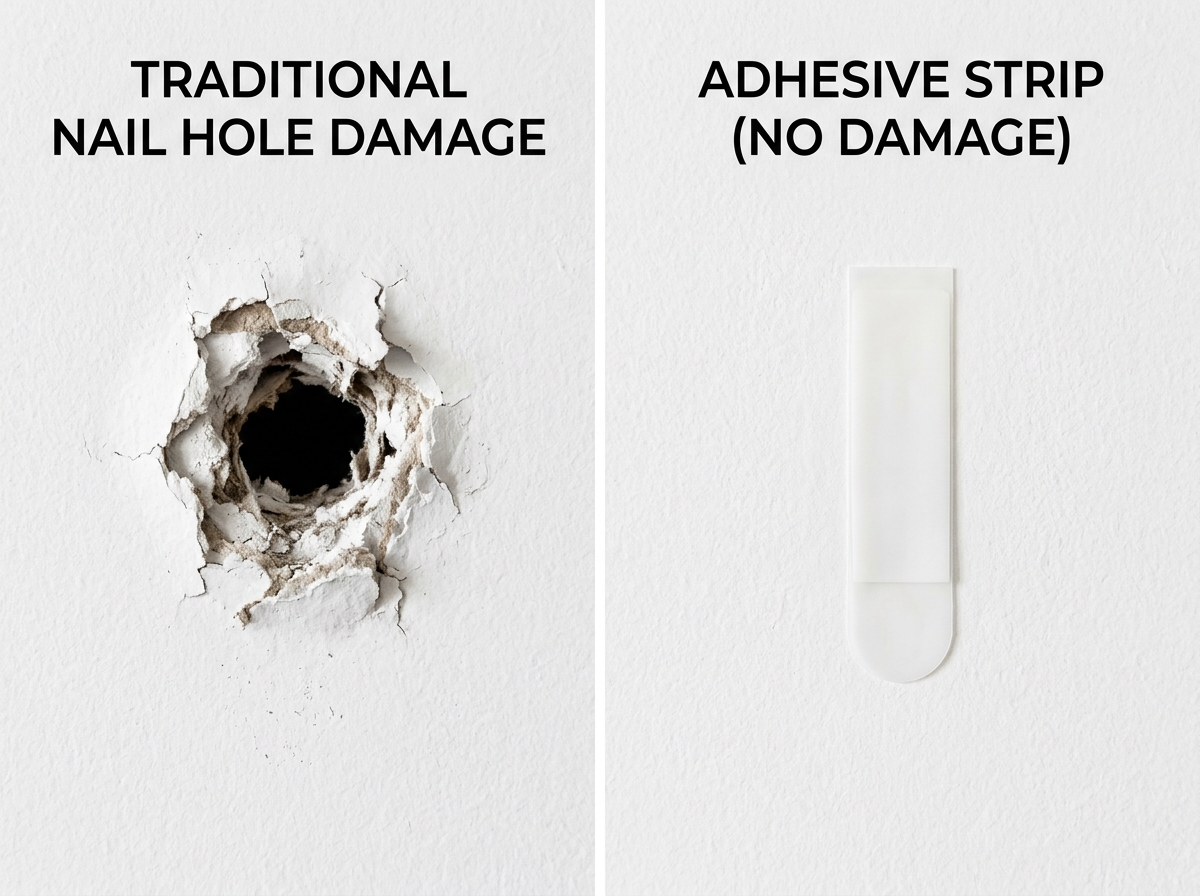
That’s exactly why no damage wall hooks have become so popular. They use pressure-sensitive adhesive, suction power, or clip-on designs to hold your stuff firmly in place. No drill. No nail. No damage.
But not all of them work the same way. The wrong hook on the wrong surface — or a rushed installation — can still peel paint or leave a sticky mess behind.
This guide covers the best products you can buy right now, how to choose the right one for your space, and how to use them correctly so your walls stay pristine.
Understanding No Damage Wall Hooks and How They Work
At first glance, a small plastic hook holding up a heavy winter coat seems like magic. In reality, it is all about clever engineering. Most no damage wall hooks rely on advanced adhesion technology. Unlike traditional tape, these adhesives are designed with “high tack” but “low peel” characteristics. This means they grab onto the surface with incredible strength when pressed flat, but they are formulated to release their grip when stretched or heated, leaving the paint underneath intact.
Surface tension also plays a major role, especially with suction-based hooks. By creating a vacuum between the hook and a non-porous surface like glass or tile, the atmospheric pressure outside the cup holds the hook in place. For those looking for more creative ways to organize without making a mess, we have gathered several practical wall storage ideas that dont require drilling that utilize these scientific principles.
Mechanical grip is another method used for specific surfaces. For example, vinyl siding hooks don’t use glue at all; instead, they “snap” into the seams of your home’s exterior. Whether it is a removable strip or a 3D-printed clip, the goal is the same: to provide a sturdy mount without the permanent scar of a nail hole.
Different Types of No Damage Wall Hooks for Every Room
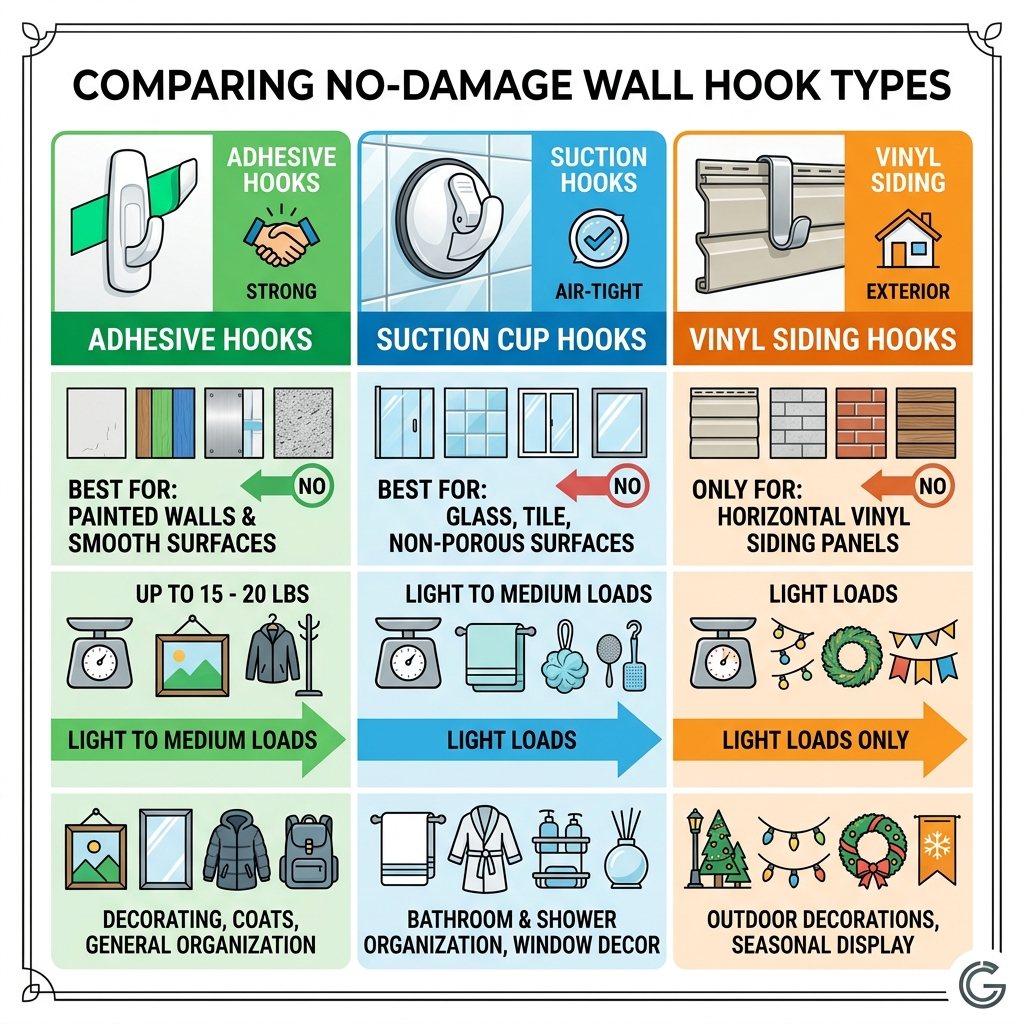
When we go shopping for hanging solutions, we quickly realize there isn’t a “one size fits all” hook. Depending on the room and the item, you’ll want to choose from these common types:
- Adhesive Strips and Hooks: These are the most common. They use a double-sided “stretch-release” strip. They are perfect for painted walls and finished wood.
- Suction Cup Hooks: Ideal for the bathroom or kitchen. Since they don’t use glue, they aren’t affected by steam in the same way some adhesives are.
- Vinyl Siding Hooks: These are stainless steel clips that slide under siding slats. They are the ultimate “no-drill” solution for outdoor holiday lights or plaques.
- Nail-Free “No Trace” Hooks: These use tiny, hair-thin pins that leave almost invisible marks, often marketed as “no damage” because the holes are smaller than a pinhead.
- 3D Printed & Decorative Hooks: For those who find standard plastic hooks a bit “industrial,” there are stylish wooden and 3D-printed options that use adhesive backings to blend into your decor.
- Metal Utility Hooks: Heavy-duty versions made of stainless steel or aluminum alloy, often used in entryways for heavy bags or in kitchens for pots and pans.
Choosing the Right No Damage Wall Hooks by Weight and Surface
The quickest way to end up with a broken picture frame and a torn wall is to ignore weight limits. Every pack of no damage wall hooks lists a maximum capacity, and we highly recommend staying well under that limit for safety.
Typical weight capacities include:
- Small/Medium Strips: 1 lb to 10 lbs.
- Large Picture Hangers: 15 lbs.
- Heavy Duty Adhesive Hooks: 20 lbs to 22 lbs.
If you are planning to hang something substantial, like a large mirror or a heavy gallery piece, you should check out our guide on how to stop the drop a guide to adhesive wall hooks for heavy items to ensure you are using the right hardware.
| Hook Technology | Best Surface | Typical Max Weight |
|---|---|---|
| Adhesive Strip | Painted Drywall | 15-20 lbs |
| Heavy Duty Glue Hook | Tile / Metal | 22 lbs |
| Suction Cup | Glass / Mirror | 5-10 lbs |
| Siding Clip | Vinyl Siding | 5 lbs |
Best Surfaces for No Damage Wall Hooks
For an adhesive to work, it needs a smooth, clean surface to “bite” into. We have found the best results on:
- Painted Walls: Specifically those with a smooth finish (satin or semi-gloss).
- Glass and Mirrors: Suction cups and adhesives love these non-porous surfaces.
- Ceramic Tile: Great for bathrooms, provided the tile isn’t textured.
- Metal and Laminated Wood: Filing cabinets, refrigerators, and modern furniture are perfect candidates.
Surfaces to Avoid to Prevent Wall Damage
Some surfaces are simply too delicate or too rough for adhesives. If you try to use no damage wall hooks on these, you risk the hook falling off or the surface coming with it:
- Wallpaper: The adhesive is often stronger than the wallpaper’s bond to the wall. Pulling the hook will likely tear your beautiful paper.
- Exposed Brick and Concrete: These surfaces are too porous and irregular. For these tricky areas, see our advice on brick wall adhesive hooks our top heavy duty picks.
- Unfinished Wood: The oils and fibers in raw wood prevent a good seal.
- Fabric and Crumbling Plaster: There is simply nothing for the adhesive to grab onto.
- Freshly Painted Walls: This is a big one! Paint needs time to “cure” (harden completely) before you stick anything to it.
Installation and Environmental Factors for Success
Most “failures” with no damage wall hooks happen because of poor preparation. You can’t just slap a hook onto a dusty wall and expect it to hold.
First, clean the area with rubbing alcohol (isopropyl alcohol). Do not use household surface cleaners, as many leave behind a slippery silicone residue that will cause the adhesive to slide right off. Use a microfiber cloth to ensure no lint is left behind.
Next, respect the curing time. We know it’s tempting to hang your picture immediately, but you should wait at least 24 hours before adding any weight. This allows the adhesive to fully bond with the wall.
Environmental factors matter too. Most indoor adhesives are designed for temperatures between 50°F and 105°F. If it’s too cold, the glue stays hard and won’t bond; if it’s too hot, it can become “gooey” and slip. For high-humidity areas like bathrooms, look for specific “water-resistant” or “bathroom” variants. To see which brands hold up best under pressure, read about the strongest holds the best adhesive hooks heavy duty buyers love.
How to Remove No Damage Wall Hooks Without Ruining Paint
Removal is where the “no damage” promise is truly tested. The biggest mistake people make is pulling the hook out toward them. This creates leverage that snaps the paint off the drywall.
Instead, use the slow-stretch technique. If using a stretch-release strip, grab the tab and pull it straight down, parallel to the wall. You may need to stretch it up to 12 inches or more before it finally releases.
If the hook is stubborn or doesn’t have a pull tab, we suggest these pro tips:
- Heat Application: Use a hair dryer on a low setting to soften the adhesive for about 30 seconds.
- Dental Floss Method: Slide a piece of dental floss or fishing line behind the hook and use a “sawing” motion to cut through the foam adhesive.
- Putty Knife: Gently slide a thin putty knife behind the base (after heating) to nudge it loose.
- Residue Cleanup: If a sticky film remains, a little rubbing alcohol on a cloth will usually dissolve it.
For a deep dive into displaying your art safely, check out hang your masterpiece top adhesive picture hangers heavy duty strength.
Frequently Asked Questions about Damage-Free Hanging
How long should I wait for paint to cure before using hooks?
This is the most common cause of wall damage. Even if paint feels dry to the touch, it is still “off-gassing” and hardening. For latex paint, we recommend waiting at least one month. For oil-based paint, a week is usually sufficient, but longer is always safer. If you apply a hook too early, the adhesive will fuse with the soft paint, and you’ll definitely pull a chunk of the wall off during removal.
Can I reuse no damage wall hooks after removal?
The hook itself (the plastic or metal part) is usually reusable! However, the adhesive strips are strictly single-use. Once they have been stretched and removed, the chemical bond is broken. You can buy replacement adhesive strips separately, which is a very cost-effective way to reorganize your home. Suction cups, on the other hand, are infinitely reusable—just wash them with warm soapy water to restore their grip.
What are the most common mistakes that cause wall damage?
- Pulling away from the wall: Always pull the tab straight down, never toward yourself.
- Overloading: Trying to hang a 20 lb mirror on a 5 lb hook is a recipe for disaster.
- Dirty surfaces: Dust and oils are the enemies of adhesion.
- Skipping the wait: Not letting the adhesive cure for 24 hours before hanging weight.
Conclusion
At Gostosuras Doces, we believe that your home should be a reflection of your personality—even if you’re just staying there for a year. Using no damage wall hooks is the smartest way to decorate without the fear of losing your security deposit or spending your final weekend in an apartment patching and painting holes.
Whether you are building a gallery wall, organizing your kitchen, or just looking for a place to hang your keys, these tools make stress-free organization possible. Ready to get organized? Explore our full range of storage solutions and start transforming your space today!
