
The Best Adhesive Wall Hooks for Renters and Homeowners
Adhesive wall hooks are one of the fastest ways to add storage anywhere in your home — no drill, no nails, no damage.
Here are the top picks to know about:
| Hook | Best For | Max Weight |
|---|---|---|
| Command Large Utility Hook | General everyday use | 5 lbs |
| QuickStick Heavy Duty Hook | Heavy items, tools | 22 lbs |
| HSV Adhesive Wall Hooks (24-pack) | Bulk organization | 33 lbs |
| 3M CLAW Drywall Hook | Heavier wall items | 25 lbs |
| IKEA SKOGHALL Hook | Bathroom, light items | 4.4 lbs |
| tesa Powerstrips Hook | Wallpaper and plaster | 1.1 lbs |
Renting an apartment? Living somewhere you can’t put holes in the walls? You’re not alone.
Millions of people deal with the same problem: you want an organized, functional home, but you’re terrified of losing your deposit — or getting yelled at for drilling into fresh paint.
That’s exactly where adhesive wall hooks come in. They stick to smooth surfaces using strong adhesive strips, hold a surprising amount of weight, and come off cleanly when you need them to.
The market has exploded. On Amazon alone, there are over 20,000 results for adhesive hooks — ranging from tiny clear clips for fairy lights to heavy-duty stainless steel hooks that hold up to 33 lbs.
But not all hooks are equal. Some fall off in humid bathrooms. Others rip chunks of paint off the wall when removed. And many don’t hold nearly what they claim.
This guide cuts through the noise and shows you exactly which adhesive wall hooks are worth buying — and why.
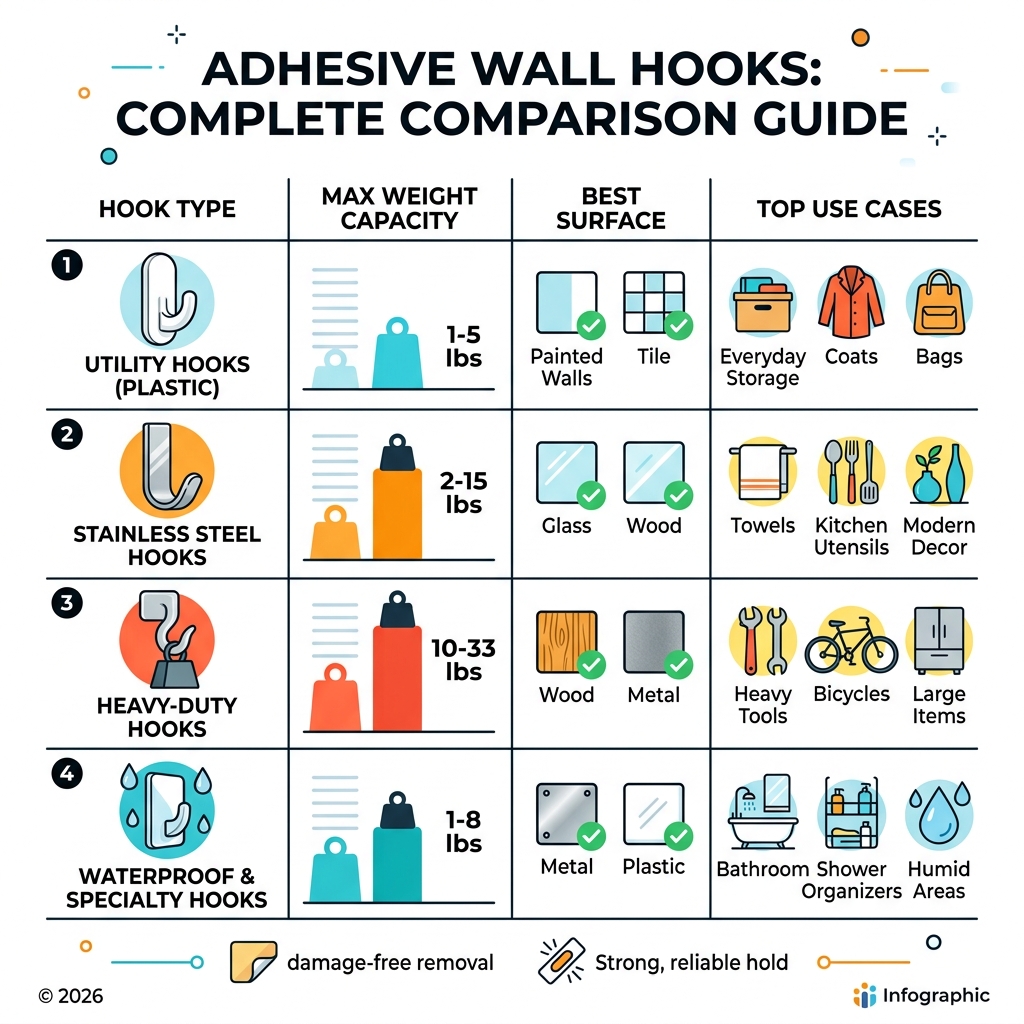
Choosing the Right Adhesive Wall Hooks for Your Space
When we walk into a hardware store or browse online, the sheer variety of adhesive wall hooks can be overwhelming. Choosing the right one isn’t just about the color; it’s about matching the hook’s material and design to the job at hand. We’ve found that the best way to categorize these is by their primary function and aesthetic.
Utility and Plastic Hooks
These are the workhorses of the industry. Brands like Command dominate this space with their classic white utility hooks. They are affordable, come in various sizes (from mini to jumbo), and are perfect for closets or behind doors. For a more “invisible” look, clear plastic hooks are a fan favorite for hanging holiday lights or small decorations without cluttering the visual space.
Modern Metal and Stainless Steel
If you want something that looks a bit more “grown-up,” stainless steel or aluminum hooks are the way to go. Products like the SKOGHALL or QuickStick series offer a sleek, industrial look. These are often waterproof and rust-resistant, making them the gold standard for bathrooms and kitchens.
Decorative and Natural Materials
Who says adhesive has to look clinical? We are seeing a rise in “Stick & Style” options. For example, some premium hooks are crafted from solid walnut wood paired with matte black pegs. These bring a touch of natural charm to entryways and bedrooms, proving that you don’t need a drill to achieve a high-end designer look.

Common Hook Materials:
- ABS Plastic: Lightweight and cost-effective.
- Stainless Steel: Durable, rust-proof, and high weight capacity.
- Aluminum: Lightweight and often used in modern, minimalist designs.
- Walnut/Natural Wood: Best for aesthetic-focused home decor.
- Acrylic: Great for a “floating” or transparent effect.
Weight Capacities of Adhesive Wall Hooks
One of the biggest questions we get is: “Will this actually hold my heavy winter coat?” The answer depends entirely on the hook’s rating and the surface it’s attached to.
Weight limits are generally determined by two types of force: shear force (pulling down parallel to the wall) and tensile strength (pulling away from the wall). Most adhesive wall hooks are designed to handle shear force—the weight of a hanging bag or coat.
| Hook Size/Type | Typical Weight Limit | Common Uses |
|---|---|---|
| Small/Mini | 0.5 – 1 lb | Jewelry, keys, fairy lights |
| Medium | 2 – 3 lbs | Kitchen utensils, small towels |
| Large | 4 – 7 lbs | Handbags, heavy coats, bath sheets |
| Heavy-Duty | 10 – 33 lbs | Tools, backpacks, large mirrors |
For those looking for high-capacity options, QuickStick Heavy Duty Hooks can hold up to 22 lbs per hook, while HSV™ Adhesive Wall Hooks claim a massive 33 lbs (15 kg) capacity on smooth, solid surfaces. If you have something truly heavy, like a large framed mirror, consider using 3M CLAW™ Drywall Hooks. While they technically use small steel claws rather than just “sticky” tape, they support up to 25 lbs without needing a stud or a drill.
Best Surfaces for Adhesive Wall Hooks
Even the strongest adhesive will fail if it’s stuck to the wrong thing. For a bond that lasts, you need a surface that is smooth, non-porous, and clean.
The “Green Light” Surfaces:
- Smooth Tile: Perfect for bathrooms and kitchens.
- Finished Wood: Great for the back of doors or cabinets.
- Glass and Mirrors: Ideal for seasonal decor.
- Painted Drywall: The most common surface, but it must be fully cured (wait at least 7 days after painting!).
- Laminate and Metal: Excellent for office cubicles or appliances.
The “Proceed with Caution” Surfaces:
- Wallpaper: Most adhesives will rip the paper right off the wall. However, specialized products like tesa® Adhesive hooks for wallpaper and plaster are designed with lower-tack tech for these sensitive areas.
- Textured Walls: If your wall looks like an orange peel or has heavy “knockdown” texture, the adhesive won’t be able to make full contact, leading to a quick fail.
- Brick or Unfinished Concrete: These are too porous and dusty for standard strips.
For more inspiration on how to organize your home without making a permanent mark, check out our guide on practical wall storage ideas that don’t require drilling.
Installation Best Practices for Long-Lasting Hold
We’ve all heard the “crash” in the middle of the night when a hook decides to give up. Usually, this isn’t the hook’s fault—it’s the installation. To ensure your adhesive wall hooks stay put, follow these expert steps.
1. Prep the Surface
Dust and oils are the enemies of adhesive. Use a clean cloth and rubbing alcohol to wipe down the area. Avoid using household “all-purpose” cleaners, as they often leave behind a slippery residue that prevents the bond from forming.
2. Check the Temperature
Adhesives are picky about the weather. Most strips, including Command, recommend an indoor temperature between 50°F and 105°F. If it’s too cold, the glue won’t become “tacky” enough to grab the wall.
3. Level Your Layout
If you are installing a row of hooks, don’t eye-ball it. Use a pencil and a level to mark a light horizontal line. For a visual walkthrough on getting that perfect alignment, check out this video guide for level installation.
4. The “30-Second Rule”
Once you press the hook to the wall, don’t just let go. Apply firm pressure across the entire strip for at least 30 seconds. This activates the pressure-sensitive adhesive.
5. The Wait (The Hardest Part)
This is where most people fail. You must wait for the adhesive to “cure.” Most brands recommend waiting 1 hour for light items, but for heavy-duty hooks, we suggest waiting 12 to 24 hours before hanging anything. This allows the chemical bond to reach its maximum strength.
Safe Removal and Damage Prevention
The “damage-free” promise is the main reason we buy these hooks, but if you rip them off like a Band-Aid, you’re going to have a bad time. Reddit users often complain about Command strips “ripping huge chunks out of the wall,” but this is almost always due to improper removal.
The Slow Pull Technique
Most adhesive strips have a tab. To remove it, hold the hook gently in place (don’t press it against the wall) and pull the tab straight down toward the floor. Never pull the tab toward you or away from the wall. You want to stretch the strip—as it stretches, it releases its grip.
The Hairdryer Trick
If a hook feels stuck or has been on the wall for years, the adhesive might have become brittle. Use a hairdryer on a medium setting to warm up the hook for about 30 seconds. This softens the glue, making it much easier to peel away without taking the paint with it.
Cleaning Residue
If a little “gunk” is left behind, don’t reach for the sandpaper. A bit of citrus-based cleaner or even more rubbing alcohol on a cotton ball will usually dissolve the residue. For a deeper look at different types of fasteners, you can explore more mounting and fastening products to see which technology fits your specific project.
Creative Applications and Heavy-Duty Alternatives
Adhesive wall hooks aren’t just for coats. We use them all over the house in ways you might not expect:
- Kitchen: Hang measuring spoons inside cabinet doors or use heavy-duty hooks for pots and pans.
- Bathroom: Mount waterproof hooks inside the shower for loofahs or squeegees.
- Office: Route cables along the side of your desk using mini clips to keep your workspace tidy.
- Garage: Use high-capacity hooks for extension cords or light gardening tools.
When Adhesives Aren’t Enough: Steel Claws
Sometimes, you need to hang something that an adhesive just can’t handle—like a 20 lb gallery frame. If you’re a renter who can handle making “pin-sized” holes, the 3M CLAW™ Drywall Hook is a brilliant middle ground. It uses hardened steel claws that lock into the drywall. It’s technically “tool-free” because you just push it in with your thumbs, and the holes left behind are so small they can be filled with a tiny dab of toothpaste or spackle.
Frequently Asked Questions about Adhesive Hooks
Can adhesive hooks be used on wallpaper?
Generally, we say no. Most adhesives are stronger than the bond between the wallpaper and the wall. If you try to remove the hook, the wallpaper will likely peel or tear. If you absolutely must, look for specialized products like the tesa® hook for wallpaper, which is engineered to be gentler. Always test an inconspicuous area first!
How do I remove sticky residue from the wall?
If the strip breaks or leaves a mess, don’t panic. Use a citrus-based adhesive remover (like Goo Gone) or a small amount of vegetable oil. Let it sit for a few minutes to break down the bond, then gently scrape it away with a plastic credit card. Avoid metal scrapers, as they will scratch your paint.
Are these hooks waterproof for shower use?
Not all of them! Standard adhesive strips will fail quickly in a steamy bathroom. You must look for hooks specifically labeled as “Waterproof” or “Bath.” These use a different type of adhesive (often blue or grey instead of white) that is designed to maintain its grip even when soaking wet. Stainless steel or plastic is preferred here to prevent rust.
Conclusion
At Gostosuras Doces, we believe that a well-organized home is a happy home. You don’t need a toolbox or a contractor to reclaim your space. By choosing the right adhesive wall hooks, prepping your surfaces correctly, and being patient during installation, you can transform any room into a clutter-free sanctuary.
Whether you’re hanging a heavy backpack in the entryway or just trying to keep your keys in one place, there is an adhesive solution ready to help. For more tips on making the most of your home, check out our other small space ideas. Happy organizing!
