
The Easiest Way to Add Shelves Without Touching a Drill
No nail shelf brackets are mounting solutions that hold shelves to walls without screws, nails, or drilling. They’re ideal for renters, apartment dwellers, or anyone who wants to add storage without damaging walls.
Here are the main types at a glance:
| Type | Best For | Typical Weight Limit |
|---|---|---|
| Adhesive peg brackets | Cabinets, closets, light shelves | Low to moderate |
| Construction adhesive mount | Lightweight floating shelves | Lightweight items only |
| Adhesive strip systems | Decorative shelves | Very light loads |
| No-stud cleat systems | Mirrors, decor, light shelves | Up to 400 lbs (varies) |
Hanging shelves used to mean one thing: drilling holes. But for renters, that can mean losing your security deposit. And even for homeowners, putting unnecessary holes in freshly painted walls is frustrating.
The good news? There are now real options that skip the drill entirely.
Adhesive shelf brackets have exploded in popularity. You can find packs of 8 to 48 pieces for as little as $3.99 to $14.99. They work on cabinet interiors, closet walls, and light display shelves with zero tools required.
The key is knowing which type to use, where, and how much weight it can realistically hold. That’s exactly what this guide covers.
Understanding No Nail Shelf Brackets and Their Benefits
When we talk about no nail shelf brackets, we are entering a world of “punch-free” innovation. Traditional brackets rely on mechanical fasteners – screws or nails – that bite into wall studs or masonry to create leverage. While incredibly strong, they leave behind “wall scars” that require patching and painting.
In contrast, no-nail solutions utilize high-strength chemical bonds (adhesives) or clever physics (tension and micro-nails) to stay upright. For those of us living in apartments or wanting to preserve the integrity of a tiled backsplash, these are game-changers.
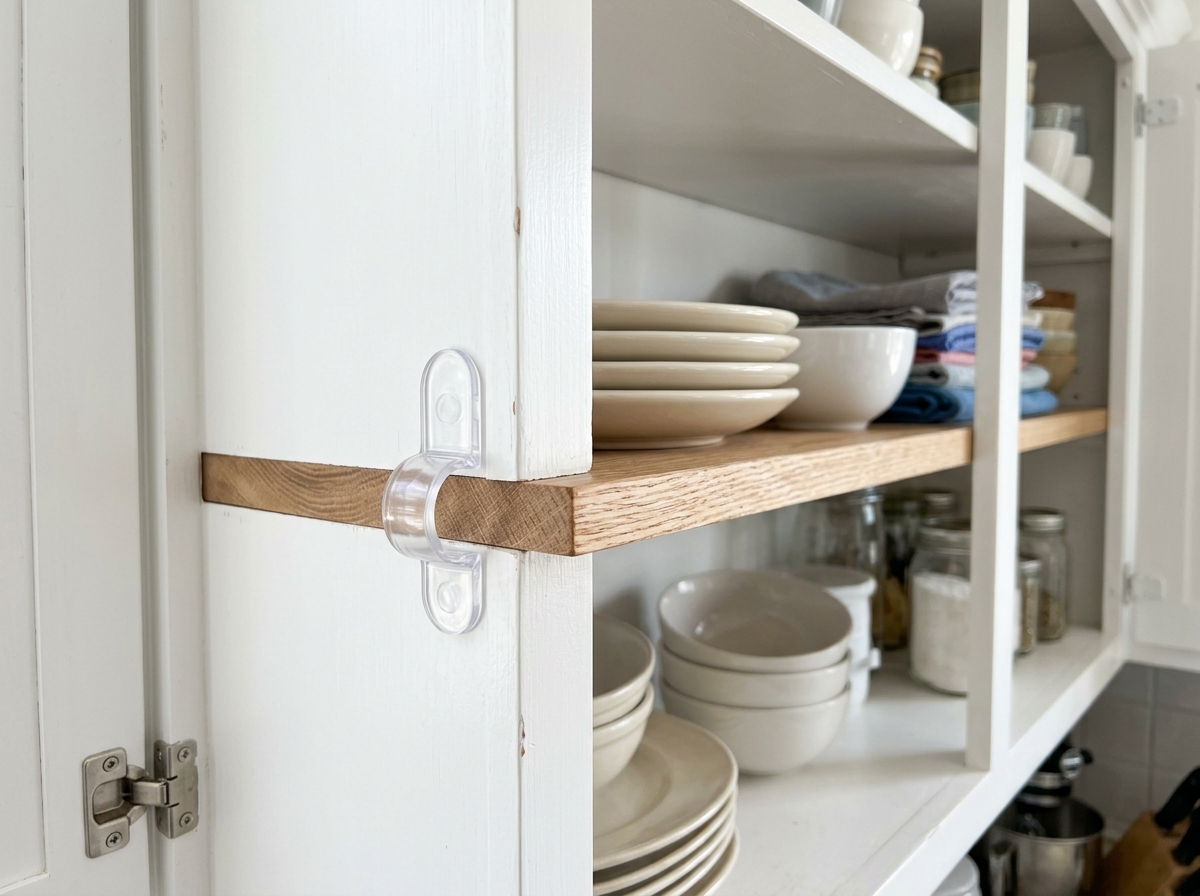
The benefits are clear:
- Rental-Safe: You can add a spice rack or a closet tier without fearing the landlord’s inspection.
- Wall Integrity: No risk of hitting a hidden pipe or electrical wire with a drill bit.
- Speed: Most adhesive systems can be installed in under ten minutes, though they do require a “curing” period before you load them up.
- Aesthetics: Many adhesive pegs are transparent, making them virtually invisible once the shelf is in place.
If you are looking for more ways to organize without a toolbox, check out these practical wall storage ideas that don’t require drilling.
Best No Nail Shelf Brackets for Lightweight Decor
For most daily needs – like adding an extra shelf to a kitchen cabinet or organizing a wardrobe – adhesive support pegs are the gold standard. These are typically small, L-shaped plastic clips backed with a powerful transparent adhesive.
We’ve seen these sold in large packs (up to 48 pieces), making them an affordable way to overhaul an entire pantry. They are perfect for:
- Kitchen Cabinets: Supporting lightweight glass or wood inserts for extra mug storage.
- Closet Layers: Dividing tall shelves into manageable sections for folded clothes.
- Shoe Racks: Creating custom heights for boots versus sneakers.
The “secret sauce” to making these work is the 24-hour rule. Even if the bracket feels stuck the moment you press it on, the bond isn’t fully matured. We always recommend waiting a full day before placing any weight on them.
Choosing the Right Size for Your Load
One of the biggest mistakes we see is “bracket mismatch.” You cannot use a tiny adhesive peg to support a 12-inch deep shelf loaded with heavy cookbooks.
To choose the right size, consider these three factors:
- Shelf Depth: The deeper the shelf, the more leverage it exerts on the bracket. For adhesive pegs, we recommend keeping shelf depth under 6-8 inches.
- Bracket Length: Longer adhesive surfaces provide more “grip” on the wall. “Double-row” reinforced pegs offer twice the surface area of standard clips.
- Weight Distribution: It is better to use four small brackets than two, even for a short shelf. Spacing them every 12-16 inches helps distribute the load and prevents the adhesive from peeling at the corners.
For a deeper dive into managing heavier items with sticky solutions, read our guide on how to stop the drop: a guide to adhesive wall hooks for heavy items.
Types of Adhesive and Damage-Free Support Systems
Not all no nail shelf brackets are created equal. Depending on your wall type and what you’re storing, you might need a different “flavor” of support.
| Support Type | Mechanism | Best Surface |
|---|---|---|
| Adhesive Pegs | Transparent adhesive film | Smooth surfaces (laminate, tile, metal) |
| Construction Adhesive | Liquid “No More Nails” glue | Drywall, wood, masonry (Permanent) |
| No-Stud Cleats | Interlocking aluminum tracks | Drywall (Uses tiny pins) |
| Tension Mounts | Spring-loaded pressure | Between two solid walls (Closets) |
For those on a budget, you can find affordable storage solutions for renters that utilize these various systems to maximize vertical space.
Specialized Solutions for Unique Surfaces
Standard adhesive brackets love smooth, non-porous surfaces like finished wood or tile. But what if you’re dealing with something trickier?
- Concrete and Brick: Traditional adhesives often struggle with the dust and texture of masonry. For these, heavy-duty construction adhesives (like Bostik No More Nails) are often used. However, be warned: this is usually a permanent solution. If you want a removable option for brick, you’ll need specialized clips that grip the edges of the brick itself. You can find our top picks for these in our article on brick wall adhesive hooks: our top heavy-duty picks.
- Drywall: If you want a “floating” look on drywall without a drill, “No Stud” technology is the way to go. These systems use a series of tiny, thin nails (pins) driven at an angle into a track. While they technically use “nails,” they are so thin that the holes are virtually invisible when removed—making them much safer for renters than traditional toggle bolts.
Safety Considerations and Common Installation Mistakes
We want your shelves to stay up just as much as you do! Even the strongest no nail shelf brackets can fail if the installation isn’t handled with care.
1. The “Dirty Wall” Disaster Adhesive hates dust, grease, and moisture. If you’re installing brackets in a kitchen, there is likely a thin film of cooking oil on your walls. Always wipe the area with rubbing alcohol and let it dry completely before applying the bracket.
2. Overestimating Weight Limits While some industrial floating shelf systems can hold 50 lbs or even 1000 lbs (like the InnovaShelf T-LOC), those require mechanical fastening into studs. Purely adhesive pegs usually top out at about 5–10 lbs per pair. If you try to stack your entire “to-be-read” book pile on an adhesive shelf, you’re asking for a midnight crash.
3. Ignoring the Curing Time We mentioned this before, but it bears repeating: Wait 24 hours. The adhesive needs time to “wet out” and create a molecular bond with the surface.
4. Misalignment Once an adhesive bracket is on, it’s usually on for good (until you’re ready to remove it with a hairdryer). If your brackets are even slightly unlevel, the weight of the shelf will pull unevenly on the adhesive, causing one side to fail prematurely. Use a spirit level and a pencil to mark your spots before you peel the backing.
For more tips on keeping your setup sturdy on a budget, see our budget-friendly storage solutions for renters.
Frequently Asked Questions about Nail-Free Brackets
What is the maximum weight capacity for adhesive brackets?
For standard “peel and stick” transparent pegs used in cabinets, the capacity is generally low—around 5 to 15 pounds per set, depending on the brand and the surface. However, if you use high-end “No Stud” cleat systems that use micro-pins, you can support significantly more. Some heavy-duty cleat hangers are rated for 100 to 400 lbs, though these are typically for mirrors or flat decor rather than deep shelves.
Can I use no-nail brackets on textured walls or wallpaper?
This is a tricky one. Adhesive brackets need maximum surface contact. Textured walls (like “orange peel” or popcorn finishes) have gaps that prevent the glue from sticking properly. Wallpaper is also risky; the adhesive might be stronger than the wallpaper’s bond to the wall, causing the shelf to fall and take a strip of your wallpaper with it! For these surfaces, tension rods or “No Stud” pin-based systems are much safer.
Are these solutions truly removable for apartment dwellers?
Yes! Most adhesive brackets can be removed by warming them up with a hairdryer to soften the glue, then gently prying them off. Any residue can usually be cleaned up with a bit of adhesive remover or soapy water. Pin-based “No Stud” systems leave holes no larger than a thumbtack, which are often ignored during move-out inspections or easily filled with a tiny dab of spackle.
Conclusion
At Gostosuras Doces, we believe that your home should be a reflection of your style, regardless of whether you own the walls or are just visiting. Using no nail shelf brackets is one of the smartest ways to reclaim your space, stay organized, and keep your security deposit intact.
Whether you are adding a few extra layers to your pantry with adhesive pegs or mounting a sleek decorative ledge with a no-stud cleat, the secret to success lies in preparation. Clean your surfaces, respect the weight limits, and always—always—give that adhesive 24 hours to settle in.
Ready to transform your home? Explore more storage solutions and start your next DIY project today!
