
Why Damage Free Mirror Hangers Are a Game-Changer for Renters and Homeowners
Damage free mirror hangers let you mount mirrors securely on your walls — no nails, no drills, no holes left behind. Here’s a quick look at your best options based on mirror weight:
| Mirror Weight | Best Solution | Example Product |
|---|---|---|
| Up to 20 lbs | Adhesive strips | Command Picture Hanging Strips |
| Up to 65 lbs | Mechanical drywall hanger | 3M CLAW Drywall Picture Hanger |
| Up to 200 lbs | No-stud bracket system | Hangman 18″ Mirror Hanger |
| Up to 300 lbs | Heavy-duty cleat system | Hangman 30″+ Mirror Hanger |
You love your mirror. You do not love the idea of a fist-sized hole in your wall — or losing your security deposit over it.
Whether you’re renting an apartment, refreshing a room, or just tired of patching drywall, the good news is simple: modern damage-free hanging technology has come a long way. Today’s options can hold mirrors weighing anywhere from a few pounds to several hundred pounds, all without touching a drill.
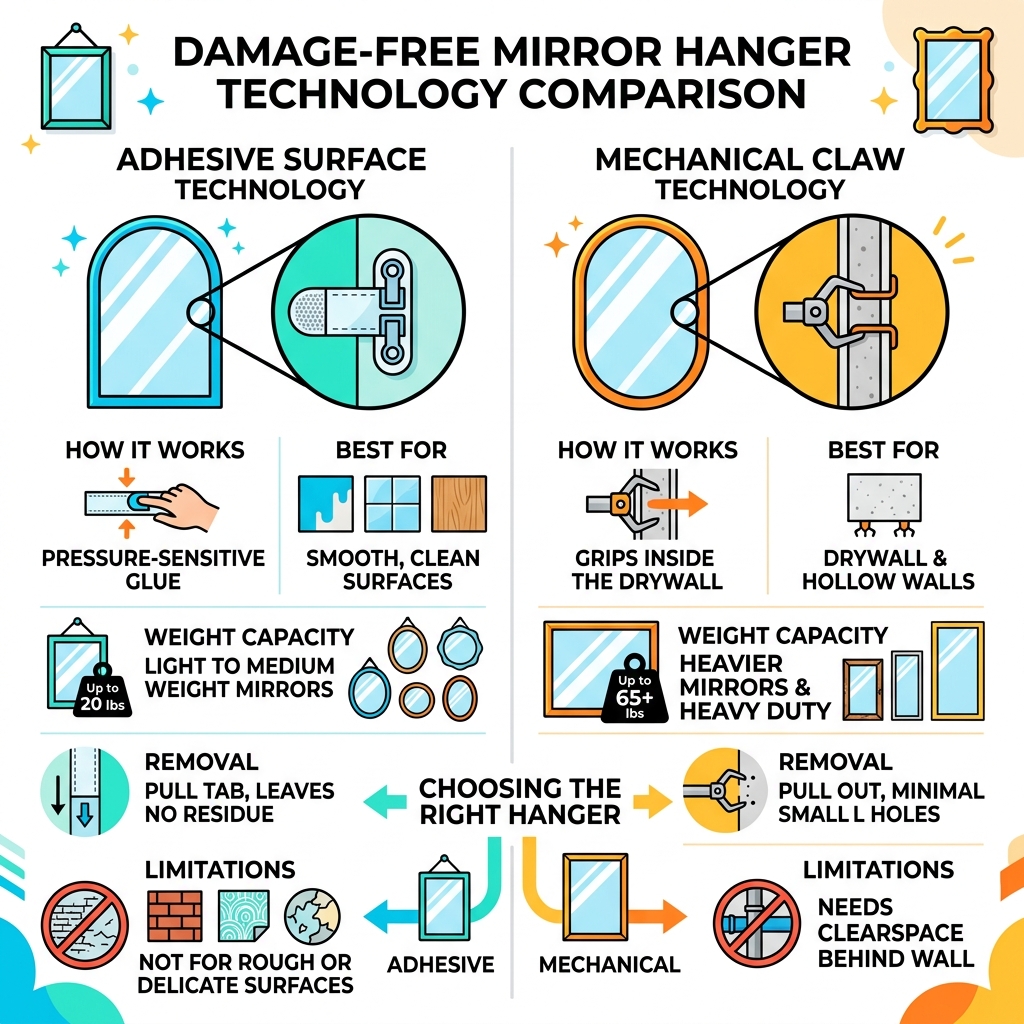
But not all damage-free hangers work the same way. Adhesive strips bond to your wall surface using pressure-sensitive glue. Mechanical options like drywall claws grip inside the drywall without needing a stud. Each has its strengths — and its limits.
Choosing the wrong one for your mirror’s weight or wall type is the most common (and costly) mistake people make.
This guide walks you through everything you need to know to hang your mirror safely, cleanly, and confidently.
Understanding Damage Free Mirror Hangers and How They Work
To understand how damage free mirror hangers work, we first have to look at the science of the “hold.” Most of us grew up thinking that if you wanted to hang something heavy, you needed a nail and a hammer. But modern engineering has given us two primary ways to defy gravity without destroying the drywall.
Adhesive Surface Tension and Interlocking Fasteners
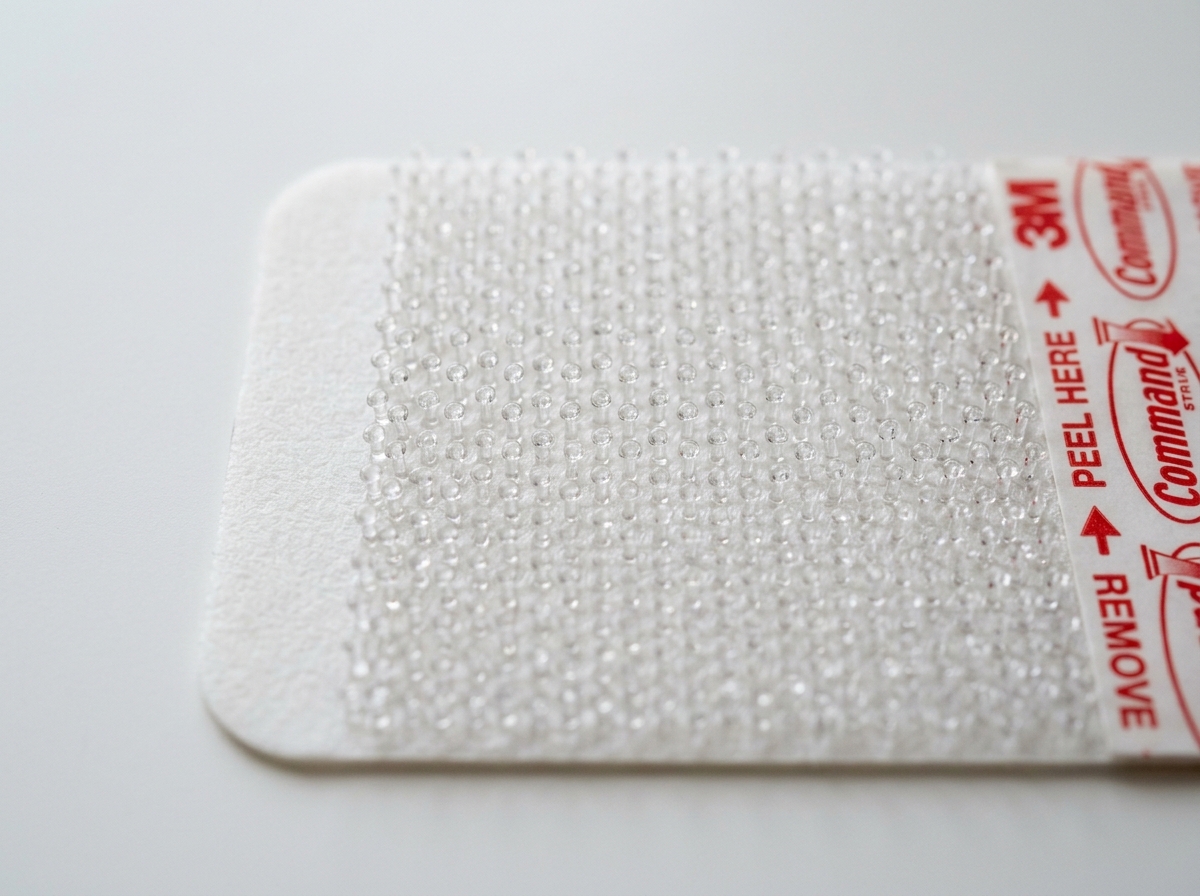
The most common type of damage-free hanger uses advanced adhesives. Think of products like Command™ Picture Hanging Strips. These aren’t just double-sided tape; they use a “stretch-release” adhesive paired with interlocking fasteners (similar to industrial-strength Velcro).
When you press the strip against the wall, the adhesive flows into the microscopic pores of the paint or wood, creating high surface tension. The interlocking mushroom-shaped heads on the strips click together, distributing the weight across the entire surface of the strip rather than a single point. This is a key concept we discuss in our Stop the Drop: A Guide to Adhesive Wall Hooks for Heavy Items, where we explain how surface area is your best friend when hanging heavy objects.
Mechanical No-Stud Technology
Then there are the mechanical “damage-free” options. While these technically make tiny marks, they are considered damage-free compared to traditional anchors because they don’t require drills or leave gaping holes.
Systems like the 3M CLAW™ or the Hangman No-Stud technology use small, hardened steel pins or “claws” that slide into the drywall at a specific angle. Because they leverage the internal strength of the gypsum board, they can hold incredible amounts of weight—sometimes up to 65 lbs or more—without ever needing to find a wooden stud.
Shear Strength vs. Tensile Strength
When using damage free mirror hangers, it’s important to understand two forces:
- Shear Strength: This is the downward pull of gravity. Hangers are designed to be strongest in this direction.
- Tensile Strength: This is the “pulling away” force. If your mirror leans too far forward, it pulls the adhesive away from the wall, which is why mirrors should always be hung flush.
| Feature | Adhesive Strips | Mechanical No-Stud Hangers |
|---|---|---|
| Wall Damage | Zero (if removed correctly) | Micro-pinholes |
| Tool Requirement | None | Thumb-push or screwdriver |
| Best Surface | Smooth (Paint, Tile, Glass) | Drywall, Plaster |
| Max Weight | Approx. 20 lbs | Up to 300 lbs |
| Reusability | Requires new strips | Often reusable |
Top Options for Hanging Heavy Mirrors Safely
If you’re staring at a heavy, ornate mirror and wondering if a piece of sticky plastic can really hold it, you’re right to be cautious. For mirrors over 20 lbs, we move into the “heavy-duty” category.
The Heavy-Duty Aluminum Wall Cleat
For the ultimate in safety, we often look toward aircraft-grade aluminum systems. The Heavy Duty Mirror & Picture Hanger is a patented system that uses interlocking brackets. One bracket is mounted to the back of the mirror, and the other to the wall.
These systems are because they use “Walldog” anchorless fasteners. These are specialized screws that bite directly into drywall or wood without the need for a plastic anchor. While they do leave a small screw hole, they prevent the catastrophic wall crumbling often associated with traditional toggle bolts. For more on high-capacity options, check out our guide on Hang Your Masterpiece: Top Adhesive Picture Hangers Heavy Duty Strength.
Adhesive Strips as Damage Free Mirror Hangers
For mirrors under 20 lbs, adhesive strips are the gold standard. We recommend using the XL Heavyweight versions which are specifically rated for higher capacities.
- Pros: Completely tool-free, works on finished wood, painted walls, and even metal.
- Cons: Not suitable for wallpaper or textured walls.
- Pro Tip: Always use more strips than the weight requires. If a mirror is 15 lbs, don’t just use 15 lbs worth of strips—bump it up to the 20 lb pack for peace of mind. Our readers often ask about the best brands, and we’ve covered that in detail here: Strongest Holds: The Best Adhesive Hooks Heavy Duty Buyers Love.
Mechanical No-Stud Damage Free Mirror Hangers
If you have drywall, the 3M CLAW™ is a miracle of modern DIY. You simply push it into the wall with your thumbs. It features engineered steel claws that lock into the drywall. It’s rated for up to 65 lbs, making it perfect for those mid-sized mirrors that are just a bit too heavy for adhesive.
For truly massive mirrors (we’re talking 100 lbs to 300 lbs), the Hangman Products No Stud Technology Hanging Solutions, TV Mount Hanger provides a level of security that was previously only possible by hiring a professional contractor.
Step-by-Step Installation and Surface Compatibility
Installing damage free mirror hangers is 10% hanging and 90% preparation. If you skip the prep, your mirror will eventually succumb to gravity.
1. Surface Preparation (The Most Important Step)
You must clean the wall. Even if it looks clean, it likely has a thin layer of dust or skin oils.
- Use Rubbing Alcohol: Use 70% isopropyl alcohol to wipe down the area where the adhesive or hanger will go.
- Avoid Household Cleaners: Do not use Windex or soap; these leave a slippery residue that prevents the adhesive from bonding.
2. Check Your Surface Compatibility
- Painted Drywall: Compatible with almost all hangers. Ensure the paint has cured for at least 30 days if it’s a new coat.
- Tile and Glass: Adhesive strips work beautifully here. This is great for bathroom mirrors.
- Brick and Concrete: Standard adhesive strips struggle here. You’ll need specialized solutions like those found in our guide on Brick Wall Adhesive Hooks: Our Top Heavy Duty Picks.
- Finished Wood: Adhesive strips are safe for varnished or stained wood and won’t strip the finish if removed correctly.
3. The “Curing” Time
For adhesive damage free mirror hangers, you cannot hang the mirror immediately. After sticking the strips to the wall, you must wait one hour for the bond to set. For heavier mirrors, we recommend waiting 24 hours just to be safe.
Professional Tips for Large Mirror Alignment
When hanging a large mirror, “close enough” isn’t good enough.
- Use a Built-in Level: Many heavy-duty cleat systems, like the Hangman Products Picture Mirror Hanger And TV Hanging Solutions – Hangman Products UK , come with a tiny bubble level built right into the bracket.
- Airflow Spacing: Professional systems like the CRL 54″ Mirraco® Mirror Hanger | CRL create a small gap between the mirror and the wall. This airflow prevents silvering degradation caused by trapped moisture, significantly extending your mirror’s life.
- Centering: Always mark the center of your wall and the center of your mirror with painter’s tape before you start. It’s much easier to align tape than it is to move a 50 lb mirror.
Safe Removal and Avoiding Common Mistakes
The “damage-free” promise only holds true if you follow the removal instructions. We’ve all seen the videos of people ripping strips off the wall and taking a chunk of drywall with them. Don’t be that person!
The Slow-Stretch Technique
To remove adhesive strips:
- Hold the mirror (or have a friend hold it) and gently pull it away from the bottom to “unclick” the fasteners.
- Never pull the tab toward you.
- Grab the removal tab and stretch it slowly downward, parallel to the wall. You may need to stretch it up to 12 inches before it releases. The stretching action chemically breaks the bond without pulling on the paint.
Common Mistakes to Avoid
- Overloading: Never exceed the weight limit. If the package says 20 lbs, it means 20 lbs in perfect conditions. If your room is humid or the wall is slightly textured, that limit drops.
- Wire-Back Mirrors on Strips: Adhesive strips are designed for flush-mount mirrors. If your mirror has a wire on the back, the wire will pull the top of the mirror away from the wall, creating “tensile stress” that will cause the strips to fail. For wire-back mirrors, use a mechanical hook like the Hangman Products No Stud Technology Hanging Solutions, TV Mount Hanger .
- Humidity Factors: In bathrooms, ensure you are using “Water-Resistant” versions of adhesive strips. Standard adhesives can soften when exposed to steam, leading to a “midnight crash.”
Frequently Asked Questions about Mirror Hanging
Can I use damage-free hangers on textured walls?
Generally, no. Adhesive strips need 100% surface contact to work. On orange-peel or knockdown textures, the strip only touches the “peaks,” reducing the bond by up to 70%. For textured walls, we recommend mechanical options like the 3M CLAW™ or the CRL 28″ Mirraco® Mirror Hanger which rely on physical grip rather than glue.
How many strips do I need for a 20lb mirror?
If you are using Command Large Strips (rated at 16 lbs per 4 pairs), you would need at least 6 pairs to be safe for a 20 lb mirror. Always check the specific weight rating on the back of your package, as different sizes have vastly different capacities. Distribute them evenly along the vertical sides of the mirror for the best load balancing.
Are these solutions safe for high-humidity bathrooms?
Yes, but you must choose the right product. Look for “Bath” specific lines. These use a different adhesive chemistry designed to stay tacky even in high-heat and high-moisture environments. Also, consider using a cleat system like the CRL 54″ Mirraco® Mirror Hanger | CRL which is made of corrosion-resistant materials.
Conclusion
At Gostosuras Doces, we believe your home should reflect your style without leaving a permanent mark on your property. Choosing the right damage free mirror hangers is the secret to a stress-free home transformation.
Before you hang that masterpiece, do a final safety check: Is the wall clean? Is the weight within the hanger’s limit? Did you wait for the adhesive to cure? If the answer is yes, you’re ready to enjoy your beautiful, secure decor.
Ready to organize the rest of your space? Check out more storage solutions to keep your home looking its best!
