
Understanding Adhesive Picture Hangers
Adhesive picture hangers are pressure-sensitive fasteners that let you hang frames, artwork, and mirrors on your walls — no nails, no drill, no damage.
Here’s a quick overview of what you need to know:
| Feature | Details |
|---|---|
| How they work | Pressure-sensitive adhesive bonds to smooth wall surfaces |
| Weight range | From under 1 lb up to 20+ lbs depending on type and quantity |
| Best surfaces | Painted drywall, tile, glass, metal, finished wood |
| Surfaces to avoid | Wallpaper, rough textures, brick, high-humidity areas |
| Removal | Stretch or pull tabs cleanly away — no holes left behind |
| Best for | Renters, apartments, dorms, anyone who wants tool-free decorating |
If you rent your home or just hate putting holes in walls, adhesive hangers are one of the easiest ways to decorate. They come in several types — strips, hooks, sawtooth hangers, and more — each suited to different frame sizes and weights.
But they aren’t perfect for every situation. Size, surface type, and proper installation all affect how well they hold. One tester’s honest take sums it up well: she never made holes in her walls, but still ended up with ruined paint on removal — and a few broken items on the floor after pieces fell overnight.
That’s why knowing which adhesive hanger to use, and how to use it correctly, makes all the difference.
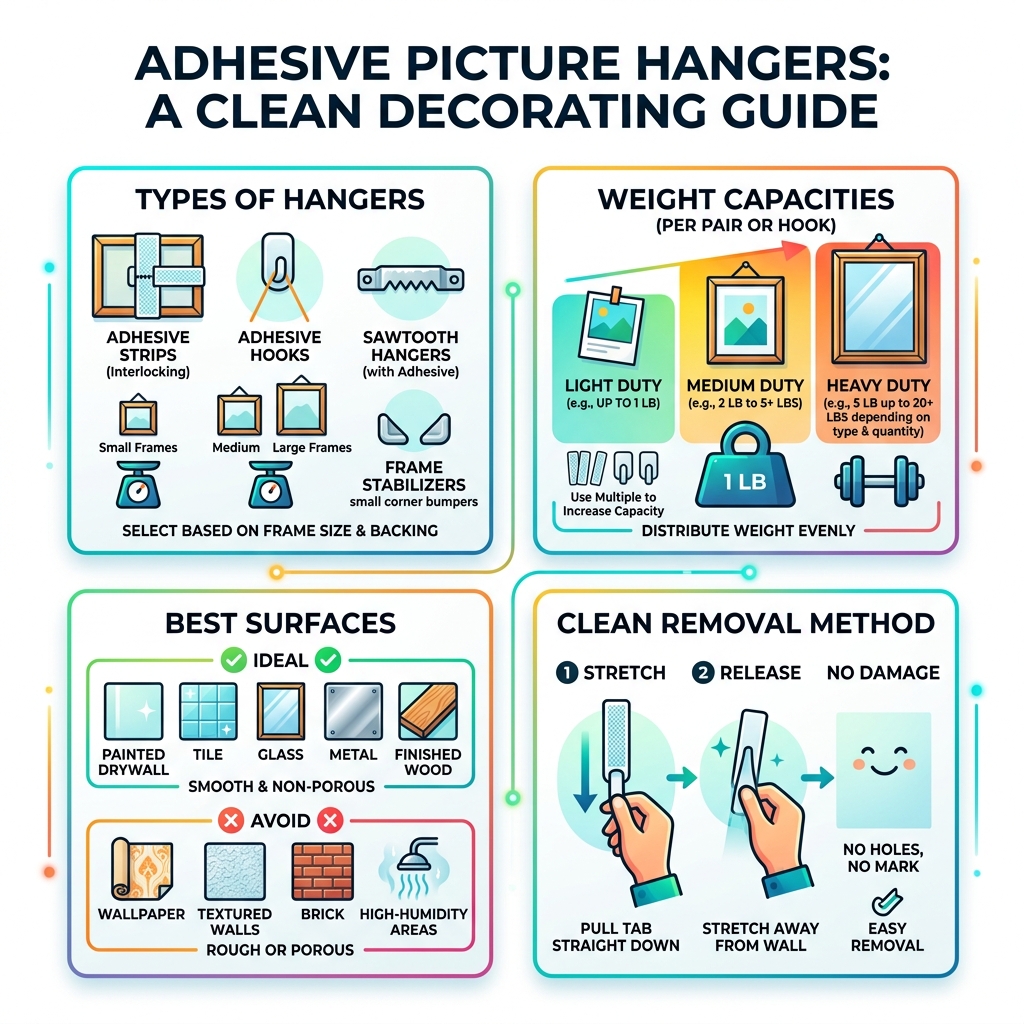
At Gostosuras Doces, we believe that your living space should reflect your personality, regardless of whether you own the walls or are just passing through for a lease term. Understanding the mechanics of these hangers is the first step toward a beautiful, hole-free home. Most adhesive picture hangers work through high-bond, pressure-sensitive adhesives. When you press the hanger against a wall, the adhesive molecules flow into the microscopic valleys of the surface, creating a mechanical bond. This is why surface preparation is so critical—any dust or oil acts as a barrier to that “flow,” leading to the dreaded “crash in the night.”
Different Types of Adhesive Picture Hangers
When you walk into a hardware store or browse online, the sheer number of options can be overwhelming. Walmart alone lists over 430 different adhesive picture hangers! To make sense of the clutter, we can categorize them by how they interface with your frames.
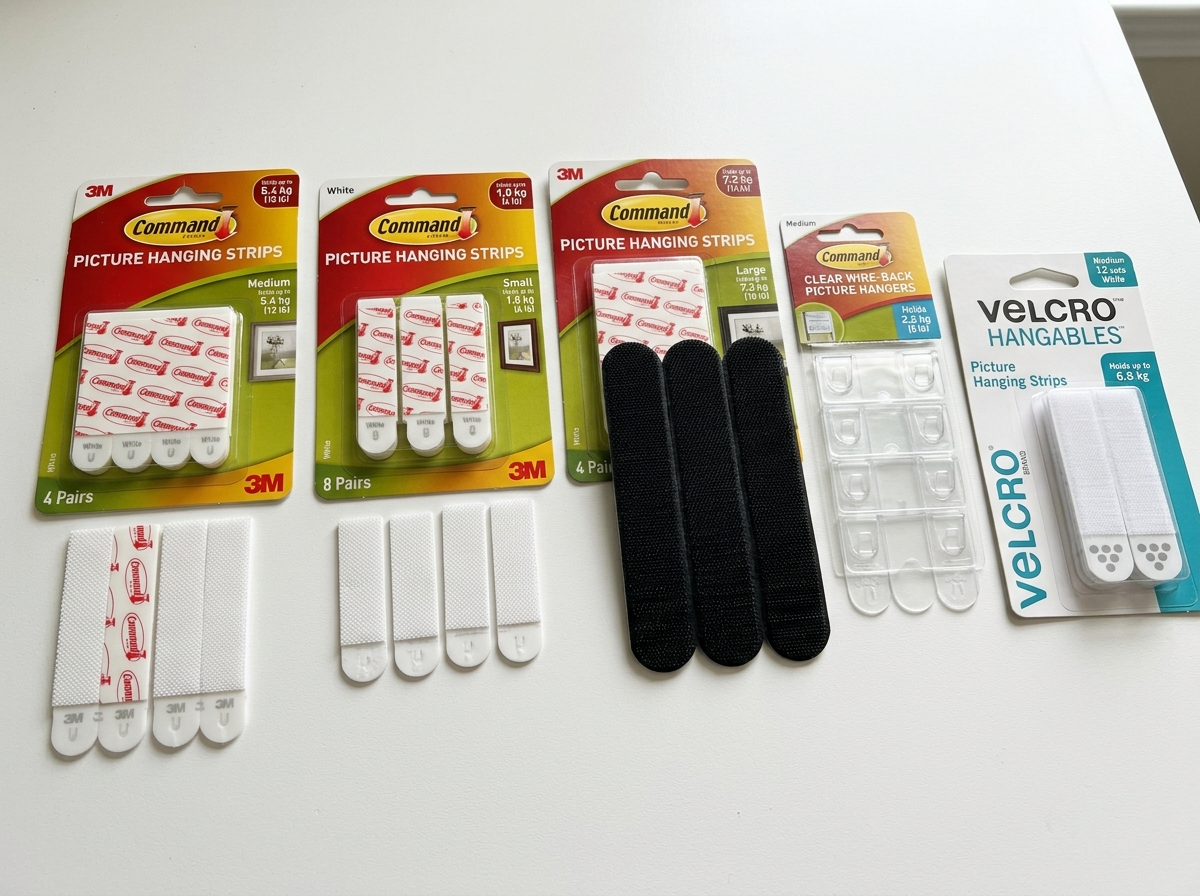
Some hangers use a hook-and-loop system, others use rigid plastic hooks, and some are specialized for foam boards. Choosing the right one depends entirely on what is on the back of your frame. For more ideas on organizing your walls without picking up a power tool, check out our guide on Practical Wall Storage Ideas That Don’t Require Drilling.
Adhesive Strips for Frames
The most common type of adhesive picture hangers are interlocking strips. These utilize a “click-lock” or hook-and-loop technology. One strip goes on the wall, and its twin goes on the back of the frame. When you press them together, they audibly “click,” letting you know they are locked in place.
These are fantastic for frame stabilization. Unlike a single nail, which can leave a picture crooked every time a door slams, these strips hold the frame at multiple points. For larger projects, products like the Command™ 15 lb Large Black Picture Hanging Strips | 3M United States are industry standards, capable of holding frames up to 24 x 36 inches when used in sets of four pairs.
Adjustable Adhesive Picture Hangers
We have all been there: you spend twenty minutes measuring, stick the hanger on the wall, and realize the picture is half an inch too low. This is where adjustable hangers shine. Brands like FrogTape offer “reMOVEables” that feature a sliding peg mechanism.
These hangers allow you to correct the height of the frame even after the adhesive is bonded to the wall. They often use “CleanGrip” technology, which is designed to be repositionable during the initial setup. This flexibility is a lifesaver when you are trying out Creative Decorating Tips for Small Apartments where every inch of wall real estate counts.
Heavy-Duty Adhesive Picture Hangers
For a long time, adhesive meant “lightweight.” That is no longer the case. Heavy-duty options now exist for mirrors and large gallery pieces. Some specialized adhesive hangers for panels (like aluminum or plexiglass) can support up to 8.8 lbs (4 kg) if you use the larger 4-inch versions.
However, once you cross the 15-20 lb threshold, “pure” adhesive starts to reach its physical limits. This is where hybrid solutions come in. While not purely adhesive, products like the 3M CLAW™ Drywall Picture Hanger 25 lb 3PH25-1EF, 1 hanger | 3M United States use hardened steel claws that push directly into the drywall. They leave no large holes and require no studs, making them the “big brother” to the adhesive family for heavyweight items.
For those working with lightweight foam-core boards, specialized sawtooth adhesive hangers exist. These are often made of high-density polypropylene and feature a pressure-sensitive foam backing that grips the porous surface of the foam board tenaciously, supporting up to 3 lbs.
Weight Capacity and Surface Compatibility
Understanding weight limits is the difference between a beautiful gallery wall and a pile of broken glass. Manufacturers provide specific ratings, but these are “lab-perfect” numbers. In the real world, factors like humidity and surface texture play a role.
As a general rule of thumb:
- Small Strips/Hangers: Usually support up to 1 lb (0.45 kg).
- Medium Strips/Hangers: Support between 3 and 12 lbs (1.3 to 5.4 kg).
- Large/XL Strips: Can support up to 15 or 20 lbs (6.8 to 9 kg) when used in sets.
Weight distribution matters. If you have a long, horizontal panoramic photo, using two hangers at the top corners is much safer than one in the middle. This prevents the frame from bowing and ensures the weight is shared equally across the adhesive bonds. If you’re looking to maximize your vertical space, learning How to Make Your Small Apartment Look Bigger: Easy Tricks and Tips often involves using these hangers to lift items off the floor and onto the walls.
Ideal Surfaces for Adhesive Picture Hangers
To get the best “stick,” you need a smooth, non-porous surface. The following are the “Goldilocks” zones for adhesive picture hangers:
- Painted Drywall: The most common surface. Ensure the paint is fully cured.
- Finished Wood: Painted or varnished wood like shiplap, cabinets, or doors.
- Glass and Tile: Excellent for kitchens and bathrooms (though check for moisture-resistant adhesive versions).
- Metal and Laminate: Great for office cubicles or modern furniture.
Using these surfaces effectively is a key part of Maximizing Space with Vertical Storage Ideas.
Surfaces to Avoid
Not all walls are created equal. Avoid using adhesive hangers on:
- Wallpaper: The adhesive is often stronger than the wallpaper’s bond to the wall. When you try to remove the hanger, the wallpaper will come with it.
- Brick or Textured Plaster: The “valleys” in these surfaces are too deep for the adhesive to fill, leading to a weak bond.
- Delicate Surfaces: Freshly painted walls (wait at least 7 days) or antique finishes.
- High-Humidity Areas: Unless specifically rated for bathrooms, standard adhesives can soften and fail in steamy environments.
Proper Installation and Removal Techniques
If you skip the instructions, you are gambling with your art. We have seen many people simply “peel and stick,” only to have the frame fall an hour later.
The Installation Process
- Clean the Surface: This is the most ignored step. Use rubbing alcohol (isopropanol) to wipe the area. Do not use household cleaners, as they often leave a slippery residue.
- Prep the Hanger: If using strips, click them together first. Remove one liner and stick it to the frame.
- Apply to Wall: Remove the remaining liners and press the frame to the wall.
- The 30-Second Rule: Press firmly on each part of the hanger for at least 30 seconds. Pressure activates the bond.
- The Curing Period: For many hangers (like sawtooth or panel hangers), you should wait 24 to 72 hours before actually hanging the weight. For Command-style strips, remove the frame from the wall (leaving the strips) and press the wall-strips again, then wait 1 hour before re-hanging the frame.
The Removal Process
To remove “stretch-release” strips, never pull the strip toward you. Instead, hold the top of the strip gently and pull the tab straight down toward the floor. You may need to stretch it up to 12 inches before it releases. This stretching thins the adhesive and breaks the bond cleanly. If you pull away from the wall, you will likely take a chunk of paint with you.
Limitations and Best Use Cases
While we love adhesive picture hangers, they aren’t a “set it and forget it” solution for everything. They have environmental limits. Most standard adhesives are rated for temperatures between 50°F and 105°F (10°C to 40°C). If you live in an area with extreme heat and no AC, or if you’re hanging something in an unheated garage, the adhesive may fail.
Furthermore, we always recommend avoiding these for “irreplaceable” or highly valuable artwork. While the failure rate is low, it isn’t zero. For heavy mirrors over a bed or a crib, a mechanical fastener (like a screw into a stud) is always the safer bet.
In the context of Minimalist Living in Small Spaces: Less Is More, adhesive hangers are perfect for seasonal decor. You can swap out holiday displays or gallery wall photos without leaving a “swiss cheese” pattern of holes in your drywall. They are the ultimate tool for dorm rooms, where “no holes” policies are strictly enforced.
Frequently Asked Questions about Adhesive Picture Hangers
Are adhesive picture hangers truly damage-free?
In theory, yes. In practice, it depends on the wall. If the paint wasn’t bonded well to the drywall in the first place, the adhesive might pull it off. However, if you follow the removal instructions (stretching the tab down, not out), they are significantly safer than nails.
Can adhesive picture hangers be reused?
The plastic hooks and hangers themselves are often reusable, but the adhesive strips are strictly one-time use. Once the adhesive has been stretched and removed, its chemical structure is changed, and it will not hold weight again. You can purchase replacement adhesive tabs to reuse the plastic hardware.
How long should I wait after painting before using adhesive hangers?
You must wait at least 7 days for the paint to cure. Even if the paint feels dry to the touch, it is still “outgassing” and hardening. Applying adhesive too early will trap moisture and solvents, preventing a bond and likely ruining your new paint job when you try to remove the hanger.
Conclusion
At Gostosuras Doces, we want to help you transform your living space into a sanctuary of style and function. Whether you are building a gallery wall of family memories or just need a place to hang your keys, adhesive picture hangers offer a versatile, renter-friendly solution. By respecting weight limits, prepping your surfaces, and being patient with curing times, you can enjoy a beautifully decorated home without the stress of permanent wall damage.
For more inspiration on how to make the most of your home, explore our other Small Space Ideas and start your journey toward a more organized, vertical lifestyle today!
