
The Quickest Way to Hang Things Without Drilling a Single Hole
Adhesive hooks for drywall are a simple, tool-free way to hang items on your walls without nails or screws.
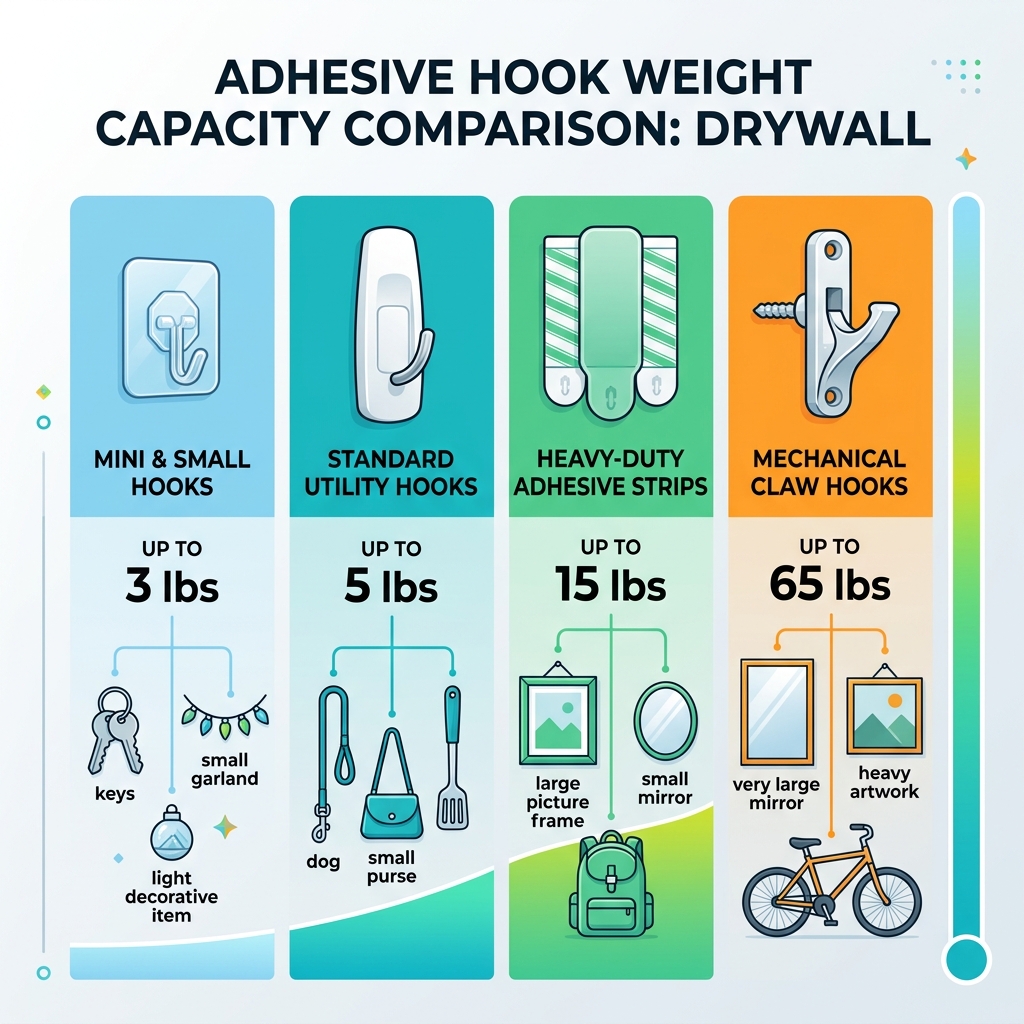
Here’s a quick overview of the most common types and what they can hold:
| Hook Type | Weight Capacity | Best For |
|---|---|---|
| Mini/small adhesive hooks | Up to 0.5–3 lbs | Keys, small decorations |
| Standard utility hooks | Up to 5 lbs | Bags, leashes, kitchen tools |
| Heavy-duty adhesive strips | Up to 15 lbs | Frames, mirrors, gallery walls |
| Mechanical claw hooks (drywall-only) | Up to 15–65 lbs | Heavy mirrors, large art |
Note: Adhesive hooks work best on smooth, painted drywall. Textured, plaster, or wallpapered walls can reduce holding power.
If you rent your home, you already know the anxiety of wanting to hang things without upsetting your landlord. Nails leave holes. Screws need tools. And ripping off a hook that’s been on the wall for six months can take a chunk of paint with it.
That’s where adhesive hooks come in — but not all of them are created equal.
Some hold half a pound. Others hold up to 44 lbs. Some are truly damage-free. Others say they are, but leave a mess behind.
This guide will help you figure out exactly which type of adhesive hook works for your wall surface, your needs, and your living situation — so you can organize your space without the stress.
Understanding Adhesive Hooks for Drywall and Their Weight Capacities
When we talk about adhesive hooks for drywall, we are looking at a marvel of modern chemistry. These aren’t just “stickers” with a plastic hook attached. Most high-quality options use advanced polymer strips that rely on a “stretch-release” technology or high-bond pressure-sensitive adhesives.
These strips work by creating a powerful tension hold between the hook’s base and the flat surface of the drywall. The adhesive flows slightly into the microscopic valleys of the paint, creating a massive amount of surface area contact. This is why they are such a staple in Practical Wall Storage Ideas That Don’t Require Drilling. Whether you are looking for DIY Storage Ideas: Make the Most Out of Your Small Apartment or just trying to clear the clutter off your counters, understanding the mechanics helps you trust the hold.
Weight limits for adhesive hooks for drywall
One of the biggest mistakes we see is “weight optimism”—hoping a small hook will hold a heavy winter coat. It usually ends with a loud thump in the middle of the night.
- Mini/Small Hooks: These are perfect for jewelry, keys, or light kitchen utensils. They typically handle 0.5 to 2 lbs.
- Standard Utility Hooks: These are the workhorses of the home. A standard large utility hook is designed to hold up to 5 lbs. This is plenty for a backpack (without the textbooks!), a heavy robe, or a large wet towel.
- Heavy-Duty Strips: If you’re looking to hang a gallery wall, Large Picture Hanging Strips are the way to go. These can often hold up to 15 lbs when used in sets.
- Extreme Heavy-Duty: Some specialized adhesive hooks found on marketplaces like Amazon claim capacities up to 44 lbs, though these often require very specific surface conditions to reach that peak performance.
Choosing the right adhesive hooks for drywall applications
Not all hooks are built for every room. The material of the hook matters just as much as the adhesive.
- Plastic Hooks: Lightweight, affordable, and come in various colors (white, clear, or even metallic finishes). These are great for closets and bedrooms.
- Metal Hooks: Usually made of stainless steel or aluminum. These offer a more high-end look and are often more durable for high-traffic areas like entryways.
- Humidity-Resistant Hooks: If you are looking for Innovative Bathroom Storage for Constricted Spaces, you must use hooks specifically labeled as “water-resistant” or “bathroom-safe.” Standard adhesives will turn into a gooey mess when exposed to shower steam.
Comparing Adhesive Strips to Mechanical Hanging Methods
Sometimes, an adhesive strip isn’t the right tool for the job. If you’re hanging a 30-lb heirloom mirror, you might want something that physically bites into the wall.
| Feature | Adhesive Strips | Traditional Nails/Screws | Steel Claws |
|---|---|---|---|
| Holding Power | Low to Medium (up to 15 lbs) | High (depends on stud) | Very High (up to 65 lbs) |
| Hole Size | None (Damage-free) | Small to Large | Tiny pin-sized slits |
| Tools Needed | None | Hammer/Drill | Thumbs/Screwdriver |
| Best For | Renters, light decor | Permanent, very heavy items | Heavy decor on drywall |
Using a 3M CLAW™ Drywall Picture Hanger 25 lb is a fantastic middle ground. It offers much more security than a sticky strip but is still vastly easier than drilling. This is a key part of Maximizing Space with Vertical Storage Ideas because it allows you to use the full height of your walls for heavier items.
Mechanical claw advantages
The “Claw” technology is a game-changer for drywall owners. These hooks use hardened steel prongs that lock into the gypsum board of the drywall.
- No Studs Needed: Unlike heavy-duty screws, you don’t need to go hunting for a wooden stud.
- High Capacity: You can find a Heavyweight Hanging Solution that holds up to 65 lbs.
- Minimal Damage: When removed, they leave two tiny slits that are almost invisible compared to the crater left by a drywall anchor.
Traditional nails and screws
Nails are the “old school” way, and for good reason—they are cheap and reliable. However, as noted in many Reddit discussions on wall damage, adhesives can sometimes be more damaging than a small nail if removed incorrectly. A nail leaves a small hole that is easily filled with a dab of spackle. An adhesive strip used incorrectly can peel away a square foot of paint and the paper layer of the drywall.
Step-by-Step Guide for Installation and Damage-Free Removal
If you want your adhesive hooks for drywall to actually stay up (and come off cleanly), you have to follow the “rules of the strip.” You can’t just slap it on a dusty wall and hope for the best.
Proper installation techniques
- Clean the Surface: This is the step everyone skips. Use isopropyl (rubbing) alcohol to wipe the spot. Do not use household cleaners, as they leave a slippery residue.
- Strip Placement: Apply the strip to the hook first, then the hook to the wall.
- The 30-Second Rule: Once the hook is on the wall, press it firmly for at least 30 seconds. This activates the pressure-sensitive adhesive.
- The Wait Time: This is the hardest part. You must wait at least one hour (some brands recommend 24 hours) before hanging any weight on the hook. This allows the bond to fully “set.” For a visual guide, check out this YouTube installation tutorial.
Following these steps is essential for Affordable Storage Solutions for Renters because it ensures you won’t lose your security deposit over a fallen shelf or a peeled wall.
Safe removal to prevent paint peeling
Removing the hook is where the “damage-free” claim is truly tested.
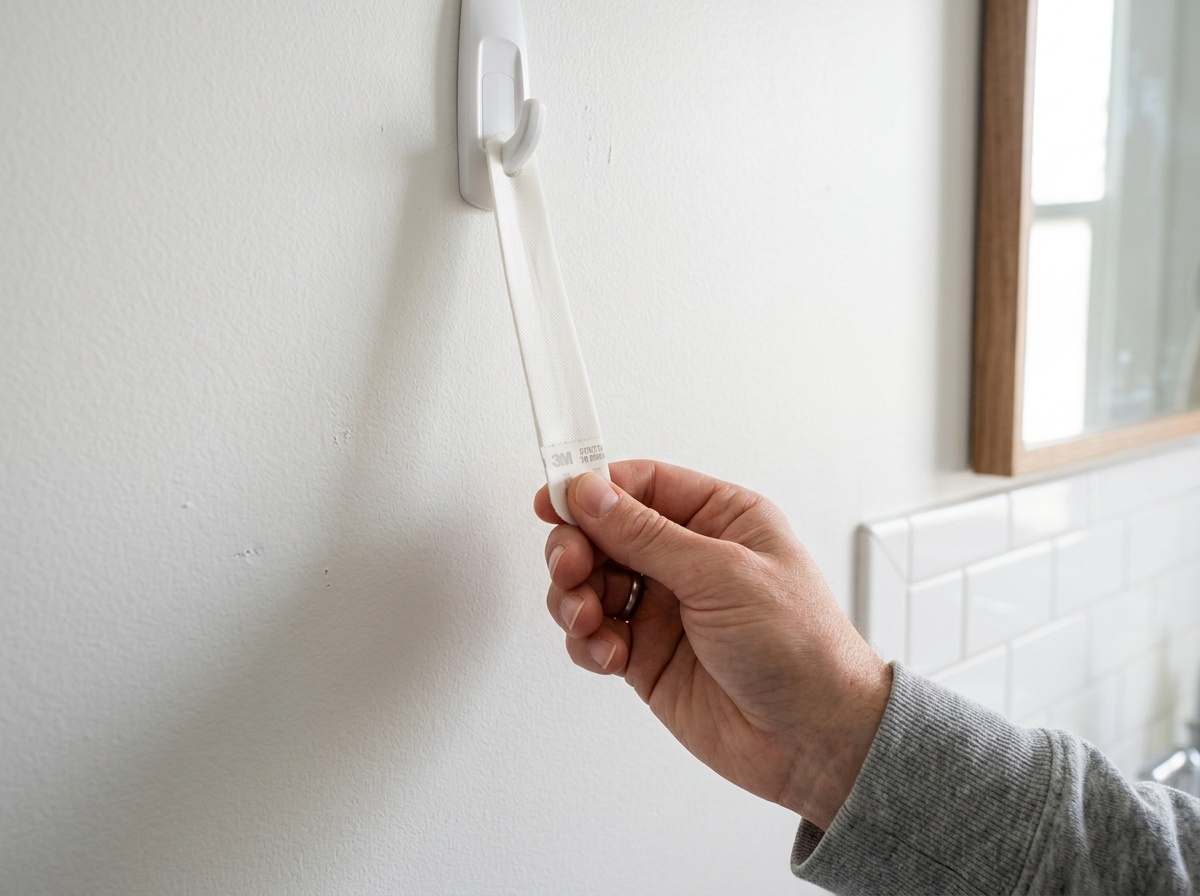
- Never Pull Toward You: If you pull the tab away from the wall, you will snap the strip or rip the paint.
- The Parallel Stretch: Hold the hook in place with one hand and slowly pull the tab straight down, parallel to the wall. Keep stretching it (it can stretch up to 15 inches!) until the hook simply falls off.
- The Dental Floss Trick: If a strip snaps or becomes brittle, take a piece of dental floss or fishing line and “saw” it behind the hook’s base to break the adhesive bond. This is one of those Tiny Apartment Hacks: How to Organize and Maximize Your Space that saves your walls.
Surface Compatibility: Wood, Wallpaper, and Plaster
Drywall is the ideal surface for adhesives, but life isn’t always that simple. We often want to hang things on the back of doors or in older homes with plaster walls.
Using hooks on wood and cabinets
Adhesive hooks work beautifully on finished wood (stained and sealed) and painted cabinets. They are excellent for Innovative Storage Ideas for Small Kitchens—think hanging measuring cups on the inside of a cabinet door.
- Caution: Avoid using them on unfinished or “raw” wood. The adhesive will soak into the fibers and won’t create a strong bond, and it may leave an oily stain behind.
Challenges with wallpaper and plaster
This is where we have to be honest: adhesive hooks for drywall often struggle here.
- Wallpaper: Most manufacturers advise against using adhesive strips on wallpaper. The adhesive is often stronger than the wallpaper’s bond to the wall. When you remove the hook, you might take the wallpaper with it. If you must use them, check out these Wallpaper installation tips which suggest that mechanical claws might actually be safer for wallpapered drywall as they puncture rather than peel.
- Plaster: Older plaster walls are often uneven and “dusty” underneath the paint. Adhesive strips may fail because they can’t get a flat, clean grip.
- Textured Walls: If your walls have a “popcorn” or “orange peel” texture, the adhesive only touches the “peaks” of the texture, reducing the holding power by up to 70%.
For more help with tricky surfaces, see our Creative Decorating Tips for Small Apartments.
Frequently Asked Questions about Wall Hooks
Are adhesive hooks truly damage-free on all paint types?
Mostly, yes—if the paint is well-bonded to the wall. If you are using them on “flat” paint or very old, brittle paint, there is a higher risk of the adhesive pulling the top layer off. Always test an inconspicuous area first!
How long do adhesive strips last before needing replacement?
In a climate-controlled room, they can last for years. However, in high-humidity areas (like bathrooms) or areas with extreme temperature swings (like a garage), the adhesive can become brittle or “gummy” over 1–2 years. We recommend checking them periodically.
Can I reuse adhesive hooks with new strips?
Absolutely! One of the best things about these hooks is that the plastic or metal part is permanent. You just need to buy a pack of replacement adhesive strips. Just make sure you clean the back of the hook with alcohol before applying the new strip.
Conclusion
Mastering the use of adhesive hooks for drywall is the secret to a functional, organized home—especially when you’re trying to avoid the “swiss cheese” look of a wall full of nail holes. From hanging coats in the entryway to organizing spices in the kitchen, these little tools offer endless possibilities for home organization.
At Gostosuras Doces, we believe your space should work for you, not against you. By choosing the right weight capacity, preparing your surfaces properly, and removing strips with patience, you can decorate with confidence. For more inspiration on making the most of your home, check out our Small Space Ideas and start your damage-free decorating journey today!
